
When mapping the true fanbase of FC Groningen, you cannot stop at the city borders. The club’s influence bleeds deep into the surrounding provinces, and the advertisement pages of the matchday programme are the best proof of this regional gravity. Hidden in the bottom left corner of the advertising grid in the February 2014 edition is a modest, charming ad for De Smidse eet-café.
What makes this advertisement culturally significant is its location: Hoofdstraat 65 in Exloo. Exloo is a small, picturesque village in the neighboring province of Drenthe, located roughly 45 kilometers south of the Euroborg. The ad promotes a classic Dutch provincial hospitality experience: “For a tasty appetite or a cozy drink? Come to eetcafe ‘De Smidse’. Menus from € 9.50.” It also notes that the snackbar and the cafe are open from Tuesday to Sunday.
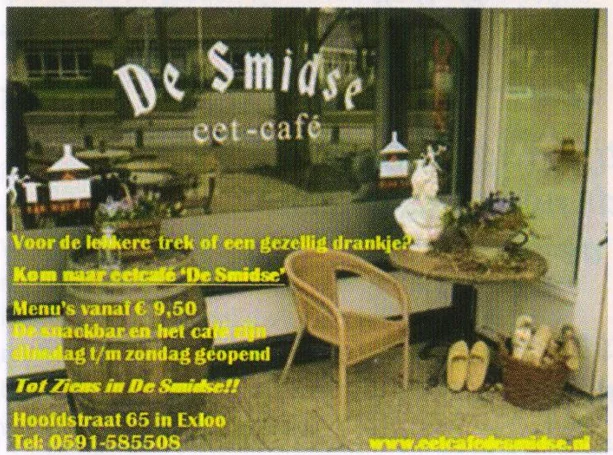
For a small village pub and diner to buy advertising space in a major Eredivisie club’s magazine speaks volumes. It shows that a significant portion of the matchday crowd travels up from the Drenthe countryside. For these fans, places like De Smidse serve as the starting point of their matchday ritual—a place to grab a cheap, hearty meal and a beer before piling into cars or buses for the long drive north to the stadium.
A Look into the Future
The traditional Dutch eet-café (eating cafe) is an institution that has faced immense pressure over the last decade from changing culinary trends, economic crises, and a global pandemic. Yet, establishments in tourist-friendly, tight-knit villages like Exloo (located in the beautiful Hondsrug region) often survive because they are the beating social heart of their communities. By 2026, the €9.50 menu advertised here is a nostalgic relic of a cheaper economic era, but the culture of gathering at the local village pub before heading to the Euroborg remains a sacred tradition for the rural supporters of the Pride of the North.