
If you want to map the true territorial footprint of a football club, look at the addresses of its advertisers. On page 39 of the December 2013 matchday programme, nestled among local city cafes, electricians, and plasterers, sits an advertisement that tells a beautiful story of geographical reach: Hotel Restaurant de Jong.
The address listed is not in the city, nor is it in the surrounding mainland villages. It is located in Nes op Ameland—one of the West Frisian Islands situated in the Wadden Sea, off the northern coast of the Netherlands. To get from this hotel to the Euroborg, a fan would have to take a ferry across the sea and then drive for an hour. Yet, this island establishment deemed it commercially viable to buy ad space in the FC Groningen matchday booklet.
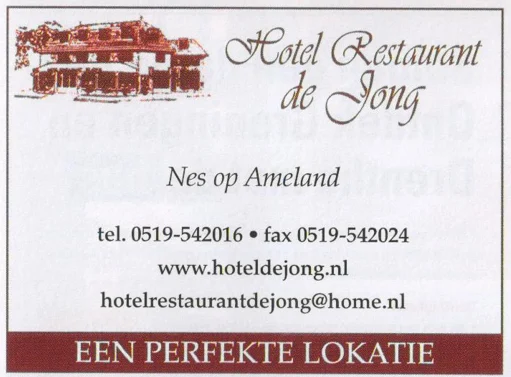
This small ad is a testament to the club’s moniker: The Pride of the North. The club’s cultural gravity pulls fans from across the sea. For the islanders of Ameland, a trip to the mainland for a Groningen match is a full-day pilgrimage. Conversely, for the city-dwelling fans sitting in the stadium, an ad for a hotel in Nes serves as a tempting reminder of a classic, breezy weekend getaway on their own northern islands. It is a perfect, symbiotic relationship between the urban football cathedral and the rural island retreat.
A Look into the Future
By 2026, the connection between the mainland and the Wadden Islands remains as romantic and vital as ever. Hotel Restaurant de Jong still stands as a classic, welcoming fixture in the heart of Nes, hosting tourists and locals alike. The logistical effort required for islander fans to attend evening matches at the Euroborg is still a badge of honor, representing some of the most dedicated support in the country. This 2013 advertisement is a beautiful, printed reminder that the borders of FC Groningen‘s kingdom do not stop at the coastline; they extend all the way across the sea.