If you want to understand the daily life of a city, don’t look at its monuments; look at the advertisements in its local football programme. The December 2014 edition of the FC Groningen matchday magazine serves as a vibrant, nostalgic directory of a commercial landscape that has, in many ways, vanished.
Scattered across pages 11, 12, 15, and 16 is the lifeblood of the northern economy. We see heavy industry represented by Meeuwes Groep Eemshaven, proudly renting out cranes since 1900. We see the nightlife anchored by Café de Zolder, the legendary pub tucked away on the Papengang, a staple for post-match pints and student revelry. There is even a highly specialized ad for Visser Zoetwaren, offering custom chocolates wrapped in the club’s logo—the ultimate niche B2B corporate gift.
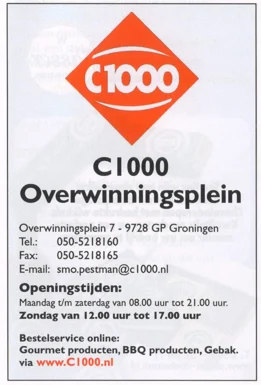
However, the most potent dose of nostalgia comes from page 15: a simple, bright orange advertisement for C1000 Overwinningsplein. For decades, C1000 was a powerhouse of the Dutch supermarket landscape, known for its aggressive local marketing and franchise model. The branch at the Overwinningsplein was a daily hub for thousands of Stadjers (citizens of Groningen). Seeing its logo printed here is like finding a fossil of a recently extinct species.
A Look into the Future
By 2026, the retail landscape of the Netherlands has been aggressively homogenized. The beloved C1000 chain was completely swallowed up by Jumbo and Albert Heijn shortly after this programme was printed; the orange signs disappeared from the streets forever. While institutions like Café de Zolder and the heavy machinery in the Eemshaven continue to operate, the hyper-local charm of neighborhood supermarkets sponsoring the local Eredivisie team has largely been replaced by national corporate partnerships. These pages remain a beautiful, tangible reminder of where the people of Groningen bought their groceries, drank their beer, and spent their weekends a decade ago.