
A football club is often a reflection of its region’s economic foundation. In the Northern Netherlands, logistics and transport form the invisible spine of the local economy, and this reality bleeds seamlessly into the pages of the matchday programme. Amidst the glossy pages, the modular advertisements for companies like Teuben Transport BV and driving schools such as Vos Verkeersopleidingen tell a story of hardworking, blue-collar loyalty.
These are not international mega-corporations looking for global TV exposure; these are regional hauliers and local instructors whose trucks traverse the Dutch highways daily. By purchasing hospitality boxes at the Euroborg or sponsoring programme pages, these transport businesses cement their status within the community. The rugged truck drivers and fleet managers who keep the supply chains moving during the week are the very same people wearing green-and-white scarves in the stands on Sunday.
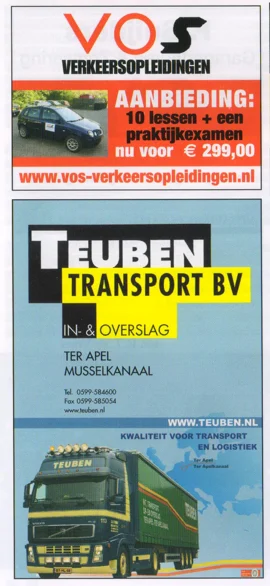
Sponsorship from the transport sector highlights a specific Northern resilience. The culture of trucking—long hours, reliability, and a no-nonsense attitude—perfectly mirrors the footballing philosophy demanded by the Groningen faithful. It is a mutually beneficial relationship: the club gets reliable financial backing from the grassroots business sector, and the transport firms get to network, entertain clients, and recruit new drivers right in the stadium concourses.
A Look into the Future
By 2026, the logistics industry in the Northern Netherlands has undergone a massive green transition. Diesel trucks are rapidly being replaced by electric and hydrogen-powered fleets, with the region pioneering hydrogen transport corridors. Yet, despite this technological leap, companies like Teuben Transport BV maintain their steadfast presence at the stadium. The vehicles have changed, but the deep-rooted loyalty of the local transport sector to their football club remains an immovable constant.