
A matchday programme is more than a football schedule; it is a time capsule of local socio-political climates. In 2015, the advertisement from the national gas giant Gasunie proudly proclaimed: “Gas makes the energy transition possible.” Set against a serene backdrop of gas pipelines and modern wind turbines, the corporate messaging aimed to project stability, progress, and environmental responsibility to the tens of thousands of fans filling the stadium.
However, outside the walls of the stadium, the reality in the province was vastly different. The Groningen Gas Crisis was escalating rapidly, with man-made earthquakes caused by decades of gas extraction damaging homes and sparking intense social unrest among the very people sitting in the stands. This advertisement stands as a fascinating historical artifact—a masterclass in corporate PR attempting to maintain a positive, forward-looking image right on the precipice of a massive regional backlash against the fossil fuel industry.
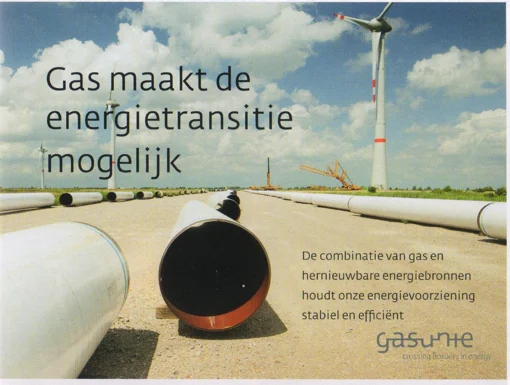
Placing this ad in the FC Groningen programme was a strategic move to align the company with local pride. Yet, the stark contrast between the glossy promise of a smooth “energy transition” and the anger of local farmers and homeowners dealing with cracked foundations perfectly captures the tension of the era. The club, as always, found itself at the intersection of local economy, politics, and community life.
A Look into the Future
By 2026, the landscape has completely transformed. The Dutch government officially halted gas extraction in the Groningen field to stop the earthquakes, turning a historic page for the region. Gasunie successfully pivoted its vast pipeline infrastructure to transport green hydrogen, securing the North’s position as a sustainable energy hub. The corporate messaging in modern matchday programmes no longer speaks of natural gas; instead, the focus is entirely on hydrogen valleys, wind energy, and ecological restoration, mirroring the resilient evolution of the province itself.