
In 2015, the Northern Netherlands found itself at the epicenter of a growing national controversy. The decades of lucrative natural gas extraction were increasingly causing devastating earthquakes, damaging homes, and sparking fierce protests among the local population. It is within this highly charged socio-political climate that the matchday programme advertisement from Gasunie becomes a fascinating historical artifact of corporate public relations.
The advertisement strategically features a serene landscape where traditional gas pipes coexist harmoniously with modern wind turbines, accompanied by the slogan declaring that gas makes the energy transition possible. At a time when anger against companies like NAM and the broader gas industry was boiling over—leading to the severe Groningen seismic crisis—this full-page spread was a calculated attempt to soften the industry’s image. The football stadium, the ultimate gathering place for the province’s residents, was the most important battleground for public opinion.
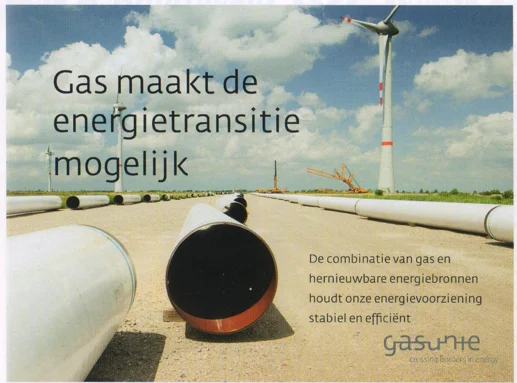
For the fans reading the programme, this ad was a stark reminder of the region’s complex relationship with the earth beneath their feet. The wealth generated by gas had enriched the country, but the local province was paying the physical price. By sponsoring the club and positioning themselves as champions of green energy, the gas giants attempted to align themselves with the pride and future of the North, even as the ground literally shook beneath the Euroborg.
A Look into the Future
Fast forward to 2026, and the landscape has fundamentally shifted. The gas taps in Groningen have been permanently closed, marking the end of an era. Gasunie has aggressively pivoted to become a European leader in hydrogen infrastructure, laying the groundwork for a fossil-free future. The tense atmosphere of 2015 has evolved into a massive regional rebuilding effort, with the football club continuously acting as a unifying symbol for a province recovering from decades of seismic damage.