To truly understand the cultural footprint of FC Groningen, you shouldn’t just look at the pitch; you should look at the addresses in the advertisement section of the matchday programme. Page 4 of the September 2013 edition is a perfect cross-section of the northern B2B ecosystem, proving that the club’s influence extends far beyond the city limits.
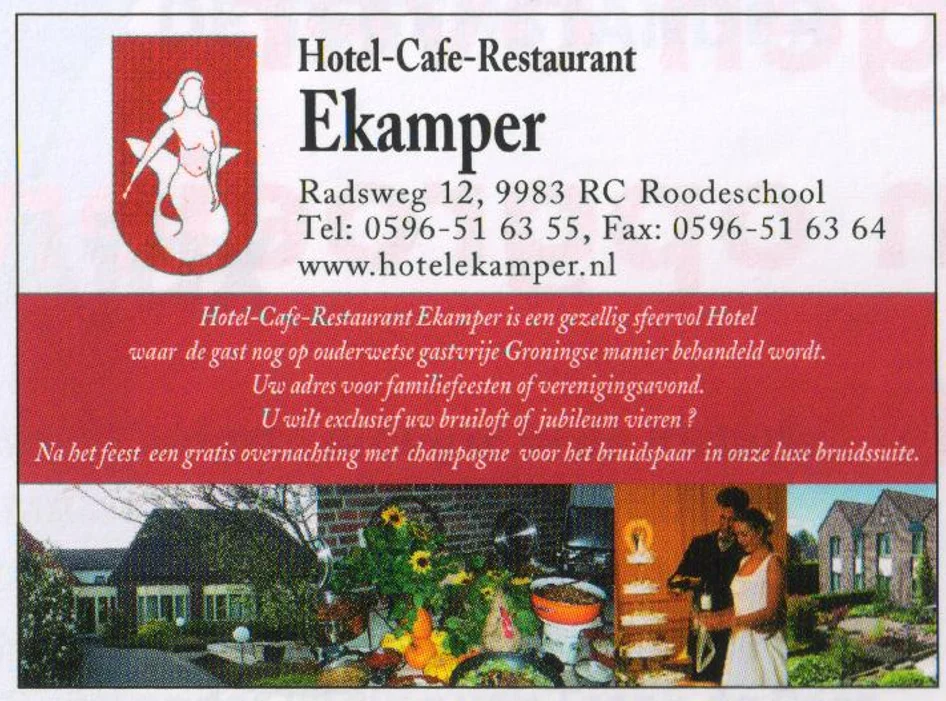
In the top left corner sits an advertisement for Hotel-Cafe-Restaurant Ekamper, located in Roodeschool. For context, Roodeschool is one of the northernmost villages in the Netherlands, sitting right on the edge of the Wadden Sea, nearly 30 kilometers away from the Euroborg. The fact that a classic, deep-province hospitality venue buys advertising space in the stadium booklet highlights the club’s status as the undisputed unifier of the entire region. The stadium is the place where the rural province meets the urban center.
Right below it, the economic narrative shifts from traditional hospitality to the future of energy. An ad for Buist Solar asks, “Zonnepanelen?” (Solar panels?). Just like the previous programme against Utrecht, the presence of solar technology ads in 2013 serves as a clear indicator of the region’s early, accelerating pivot toward green energy. Rounding out the page is Visser Zoetwaren, a classic wholesaler of business gifts and chocolates, representing the traditional networking culture that takes place in the stadium’s business lounges.
A Look into the Future
The contrast on this page tells the story of the province’s evolution. The solar energy sector, represented by Buist Solar, would explode into a multi-billion euro industry in the north over the next decade, driven by the urgent need to replace natural gas extraction. Meanwhile, traditional provincial hubs like Hotel Ekamper in Roodeschool remain vital cultural anchors in areas facing demographic shrinkage. The matchday programme remains one of the few places where these two vastly different economic realities—the hyper-modern energy transition and the historic rural hospitality—sit comfortably side by side.