
When analyzing the commercial layout of a matchday programme, the placement of an advertisement tells you exactly who the club thinks is reading it. On page 4 of the March 2014 edition, placed directly opposite the manager’s highly anticipated pre-match column, sits a modest, highly utilitarian advertisement for De Aanleg, an APK (Algemene Periodieke Keuring) service station.
In the Netherlands, the APK is the mandatory periodic vehicle inspection. It is a mundane, unavoidable chore for every car owner. The fact that a garage located in Winsum—a village about 15 kilometers north of the city—bought premium ad space in the FC Groningen booklet is a brilliant piece of demographic targeting. It acknowledges a fundamental truth about the club’s fanbase: a massive portion of the supporters do not live in the city center. They are commuters. They drive in from the surrounding villages and rural municipalities, filling the massive parking lots around the Euroborg every other week.
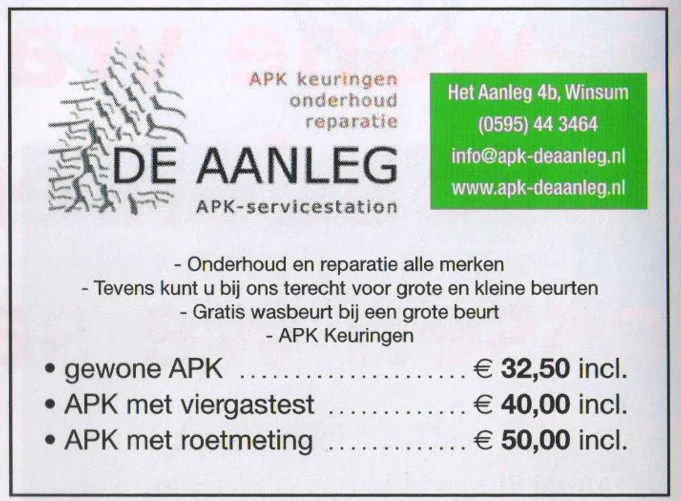
The ad is a perfect economic time capsule, listing the exact prices for 2014: a standard APK for €32.50, or €50.00 including a soot measurement for diesel cars. For the working-class fan reading the programme before kickoff, this wasn’t just an ad; it was a practical reminder to get their car sorted before the deadline. It proves that the matchday magazine was viewed as a genuine community bulletin board.
A Look into the Future
The automotive landscape has shifted dramatically since 2014. By 2026, the rise of electric vehicles has fundamentally changed the nature of car maintenance and the traditional APK inspection, making “soot measurements” increasingly a thing of the past. However, the commuter culture of the FC Groningen fanbase remains exactly the same. Fans still drive down from places like Winsum to support the Pride of the North, proving that while car engines have changed, the routes to the stadium have not.