
A matchday programme is not just a football booklet; it is a socio-economic time capsule. If you look past the glossy photos of millionaire athletes, the advertisement pages often reveal the stark economic realities of the fans sitting in the stands. Page 16 of the September 2013 FC Groningen programme provides a perfect, slightly jarring example of this through an advertisement for Kremer Juweliers.
The ad doesn’t primarily promote diamond rings or luxury watches. Instead, the boldest text on the graphic screams: “DE HOOGSTE PRIJS VOOR UW OUD GOUD” (The highest price for your old gold), featuring a picture of a treasure chest overflowing with jewelry. In 2013, the Netherlands, like much of Europe, was still feeling the long-tail effects of the global financial crisis and the Eurozone debt crisis. Gold prices had surged to historic highs in the preceding years, sparking a massive “cash for gold” boom.
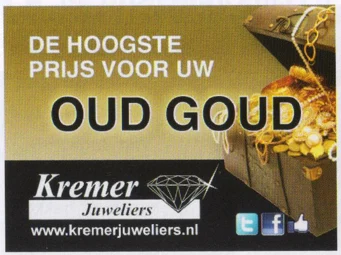
Seeing this advertisement in a football programme is a profound reminder of the era’s working-class reality. While the club was negotiating transfers and paying Eredivisie salaries, some fans in the Euroborg might have been looking at this ad, considering selling a broken necklace or an inherited ring just to make ends meet, pay the bills, or perhaps even afford their season ticket. It is a raw, unvarnished slice of 2013 macroeconomic history printed right next to the player statistics.
A Look into the Future
As the European economy slowly recovered throughout the mid-to-late 2010s, the aggressive “cash for gold” gold-rush eventually subsided, and traditional jewelers returned their primary focus to retail sales rather than scrap purchasing. Kremer Juweliers, a local staple, adapted and survived the changing economic tides. However, this specific advertisement remains frozen in time—a fascinating artifact proving that a football club’s matchday magazine is always inextricably linked to the financial heartbeat of its city.