
If you want to understand the profound tragedy that struck the northern Netherlands in the 2010s, you don’t need to read a government report; you just need to look at the advertisements on page 66 of the December 2013 FC Groningen matchday programme. The left page features two prominent ads from regional organizations: the economic bureau eemsdelta\ez and the housing association Wierden en Borgen.
The housing association’s advertisement is particularly striking. Under the slogan “Van Stad tot Wad” (From City to Mudflats), they proudly offer 5,000 homes across several northern municipalities, promising “Wonen zonder Zorgen” (Living without worries). The municipalities listed at the bottom of the ad include Bedum, De Marne, Eemsmond, Loppersum, Ten Boer, and Winsum.
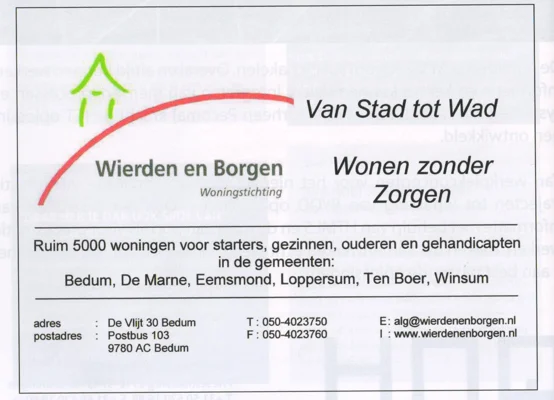
In late 2013, those names were just quiet, picturesque rural communities. But within months, names like Loppersum would become internationally synonymous with the devastating induced earthquakes caused by the extraction of natural gas from the Groningen gas field. The promise of “living without worries” printed in this football booklet became a heartbreaking, bitter irony. The residents of those exact 5,000 homes would soon face years of severe anxiety, cracked foundations, plummeting property values, and endless battles with the government and energy companies for compensation.
A Look into the Future
The seismic crisis completely reshaped the socio-economic landscape of the region. Housing associations like Wierden en Borgen found themselves at the center of a logistical nightmare, tasked with reinforcing or completely rebuilding thousands of unsafe homes for their terrified tenants. The economic bureau eemsdelta\ez had to pivot from promoting standard business to managing a crisis economy. Looking back at this page from the perspective of 2026, it is a chilling time capsule—a snapshot of the exact moment before the ground beneath the Pride of the North permanently fractured, shattering the promise of a worry-free life.