
Sometimes, the juxtaposition of two small advertisements in a matchday programme of FC Groningen tells a much larger story about a region’s collective state of mind. On page 57, amidst the usual B2B promotions, a mundane gardening ad sits right next to a grim reminder of the region’s greatest modern crisis, creating a surreal snapshot of life in the Northern Netherlands.
On the left, a stark, red-accented block for Fledderman Bouw asks a chillingly casual question: “Aardbevingsschade?” (Earthquake damage?). It offers specialized repairs for structural cracks caused by the relentless gas extraction by the NAM. Directly beside it is an elegant, green ad for Bartelds Hoveniersbedrijf, a local landscaping and gardening company. This layout perfectly encapsulates the bizarre duality of Groningen in 2015.
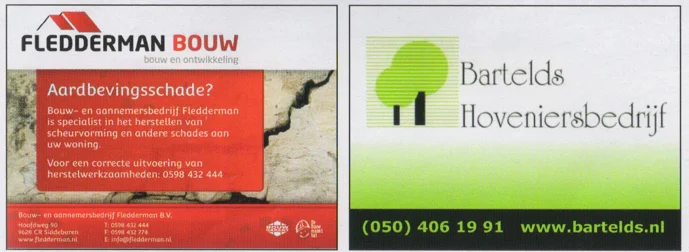
While one homeowner is forced to hire a specialized contractor to fix crumbling foundations and structural tears, their neighbor might be calmly hiring a landscaper to plant hedges and design a tranquil backyard oasis. It is a testament to Northern stoicism. Despite the ground literally shaking beneath their feet, life goes on. The crisis became so normalized that repairing earthquake damage simply became another local service, advertised right next to ERP software and shot drinks like Kleiner Klopfer.
A Look into the Future
By 2026, the gas tap in Groningen has finally been closed, marking the end of an era, but the bureaucratic nightmare of damage claims continues to plague the region. Companies like Fledderman Bouw likely spent the next decade fully booked with complex reinforcement projects, becoming structural saviors for many families. Meanwhile, local businesses like Bartelds Hoveniersbedrijf continued to thrive, eventually adapting to new environmental challenges by offering climate-resilient, drought-proof garden designs, proving the enduring, quiet resilience of the Northern economy.