
A football matchday programme is a microcosm of society, capturing not just the local economy, but the entire spectrum of human experience. Sometimes, the layout editor inadvertently creates a masterpiece of dark comedy. Page 41 of the December 2014 programme is a perfect example of this phenomenon.
Nestled in the middle of the page is a warm, inviting advertisement for Ristorante Romantica, a local Italian spot on the Rademarkt promising a welcoming atmosphere hosted by Michele & Beniamino. It’s the perfect place to take your partner after a FC Groningen victory. However, directly adjacent to it, sharing the exact same visual space, is a stark, text-heavy advertisement for De ScheidingsMakelaar—a divorce broker.
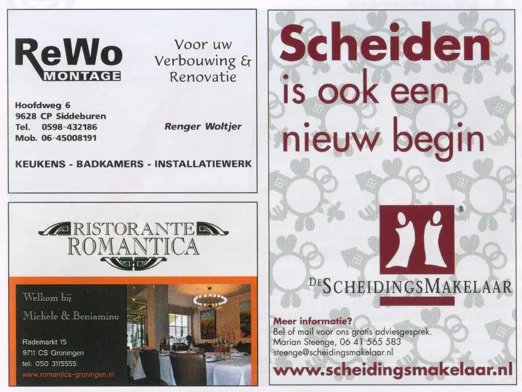
The divorce ad features the incredibly pragmatic Dutch slogan: “Scheiden is ook een nieuw begin” (Divorce is also a new beginning). The contrast is jarring and deeply human. In one glance, a fan sitting in the stands of the stadium is offered both the promise of eternal romance over a plate of pasta and a streamlined legal exit strategy if that romance fails. It is a reminder that life, with all its messy complications, continues outside the 90 minutes on the pitch.
A Look into the Future
In the highly sanitized, algorithm-driven world of digital advertising in 2026, this kind of random, tragicomic juxtaposition rarely happens. Today, ads on club apps are hyper-targeted based on user data; you only see the divorce lawyer if your search history suggests you need one. Print programmes, however, were a broadcast medium. They threw everything at the wall—roofers, romantic dinners, and divorce brokers—and let the reader sort it out. It’s a charmingly chaotic relic of local print media that makes these old booklets so endlessly entertaining to read.