
When analyzing the commercial pages of a matchday programme, it is crucial to look beyond the shiny product and understand the macroeconomic climate of the era. On page 58 of the May 2014 edition, local car dealership Broekhuis Groningen placed a prominent advertisement featuring a gleaming, gold-colored Volvo V40 parked digitally in front of the green seats of the Euroborg. The slogan reads: “Met Broekhuis Groningen heeft u de juiste club in handen” (With Broekhuis Groningen you have the right club in your hands).
At first glance, it is a standard automotive sponsorship ad. But in the context of 2013/2014, the European automotive industry was navigating a brutal crisis. Car sales across the continent had plummeted to a 20-year low, crippled by the lingering effects of the Eurozone debt crisis and low consumer confidence. For regional dealerships like Broekhuis, selling premium compact hatchbacks to everyday consumers was incredibly difficult. Therefore, this advertisement was not aimed at the average fan standing in the Z-Side; it was a highly targeted B2B sniper shot aimed directly at the executive lounges.
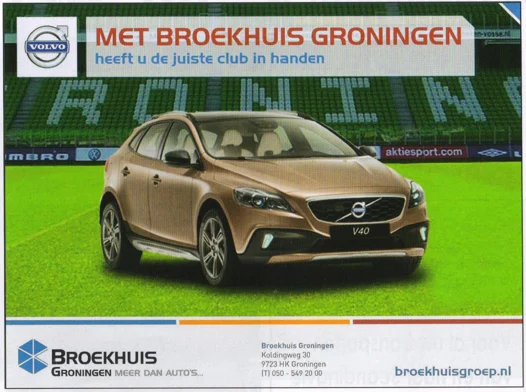
The business clubs of FC Groningen were filled with local CEOs, fleet managers, and entrepreneurs. In a depressed market, securing corporate leasing contracts was the only way for dealerships to survive. The Volvo V40, introduced as a stylish, tax-friendly corporate car, was the perfect bait. By associating their dealership with the emotional pull of the local football club, Broekhuis was leveraging stadium networking to keep their sales figures afloat during one of the darkest periods for European car manufacturers.
A Look into the Future
The cyclical nature of the automotive industry is fascinating. By 2026, the Volvo V40 pictured in this ad has long been discontinued, and the European auto industry is facing a completely new, existential crisis: the painful transition to electric vehicles and fierce competition from Chinese manufacturers. Dealerships like Broekhuis Groningen have had to radically transform their showrooms and business models to survive this new era. Yet, the strategy remains exactly the same as it was in 2014: when the market gets tough, you buy an ad in the local football programme and head to the stadium’s VIP lounge to shake hands and close deals.