
Football stadiums are traditionally temples of indulgence. The matchday diet of the average Dutch fan consists heavily of beer, deep-fried krokets, and gehaktballen (meatballs). Yet, on page 12 of the October 2013 matchday programme, a full-page advertorial for Plaza Sportiva (the fitness center located inside the Euroborg complex) introduces a radically different narrative: “Healthy Ageing.”
Under the banner “SAMEN STERK” (Strong Together), the text addresses a sobering demographic reality. “Figures and statistics show us a lot. We are getting older, but prosperity diseases are increasing,” the ad warns. It promotes a lifestyle intervention project featuring personal trainers and cardiologists, aimed at helping people lose weight and regain their fitness.
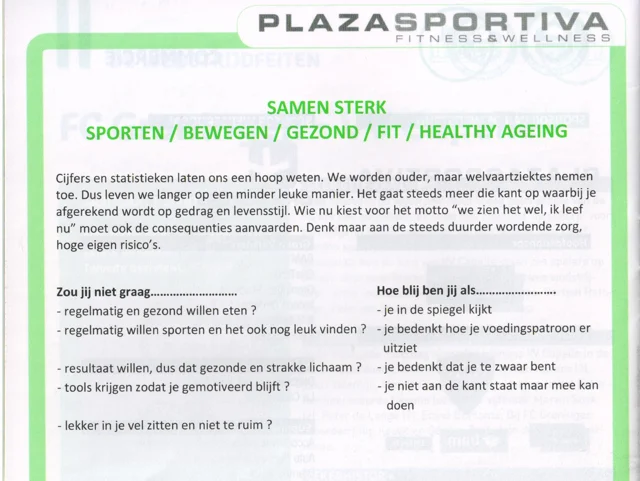
Placing a clinical, health-focused advertorial in a football magazine is a fascinating piece of targeted marketing. It acknowledges the demographic truth of the club’s core support: the loyal season-ticket holders who have been following the club since the Oosterpark days are getting older. The club and its commercial partners recognized that the stadium could be more than just a place for weekend escapism; it could be a hub for community health and longevity.
A Look into the Future
The concept of “Healthy Ageing” became a massive, region-wide priority for the province of Groningen in the 2010s and 2020s, heavily supported by the local university and medical center (UMCG). FC Groningen actively integrated this philosophy into its community outreach, eventually launching programs like “Walking Football” specifically designed to keep elderly fans active and socially engaged. This 2013 advertorial by Plaza Sportiva was an early, printed indicator that the modern football stadium was evolving into a holistic community center, caring for its fans long after the final whistle.