
When browsing the commercial pages of a 2012-13 matchday programme, amidst the standard ads for accountants and car dealers, you occasionally stumble upon highly specialized, traditional craftsmanship. A perfect example is the advertisement for Idéfix, a self-proclaimed “Zink en Koper Specialist” (Zinc and Copper Specialist), located on the Beckerweg in Groningen.
The advertisement immediately stands out due to its elegant visual: a beautiful, classic garden pavilion featuring a meticulously crafted zinc roof and decorative ornaments. Unlike general construction firms, Idéfix marketed a very specific, heritage-driven skill set. Their list of services—ranging from zinc facades and copper gutters to intricate roof ornaments—speaks to the rich architectural tradition of Dutch cities. For a niche B2B company like this, advertising in the FC Groningen programme wasn’t necessarily about selling a roof to an average fan in the stands; it was a strategic move to catch the eye of real estate developers, architects, and wealthy homeowners sitting in the stadium’s business lounges.
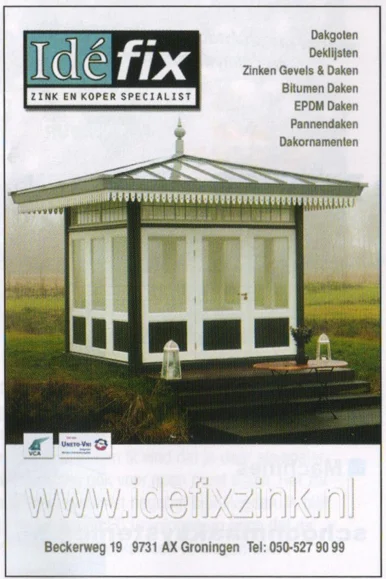
The presence of such specialized artisans in the football club’s commercial ecosystem highlights how deeply intertwined the club is with the physical building and maintenance of the city itself. It is a reminder that behind the modern concrete and steel of the stadium, the local economy still heavily relies on traditional, hands-on craftsmanship.
A Look into the Future
By 2026, the skills possessed by the craftsmen at Idéfix have become more valuable than ever. In an era dominated by mass-produced building materials and digital technology, true artisans who can work with zinc and copper are a rarity. Furthermore, the extensive restoration programs in the Groningen region—driven by the need to repair historical buildings damaged by gas-extraction earthquakes—have put a massive premium on traditional roofing and facade restoration. The companies that preserved these analog skills, and proudly advertised them at the football club over a decade ago, are now the vital guardians of the region’s architectural heritage.