
A matchday programme is not just for selling cars and beer; it is a billboard for regional identity and ambition. On page 20, a massive, full-page spread for [[Blauwestad]] attempts to sell an idyllic vision of the Northern lifestyle. But for the local fans in the stands, this was not just another real estate ad—it was a reminder of one of the most controversial and complex mega-projects in the history of the province.
The advertisement, featuring the slogan “Dit is óók Blauwestad” (This is also Blauwestad), shows people ice skating, sheep grazing, and a sleek modern waterfront villa. This defensive phrasing is telling. The Blauwestad project, located in the Oldambt region, involved intentionally flooding prime agricultural land to create a massive artificial lake surrounded by luxury homes. It was designed to boost the struggling local economy and attract wealthy residents from the west. Instead, it faced fierce resistance from local farmers, suffered brutal delays, and hit a massive wall during the 2008 financial crisis, leaving many plots empty for years.
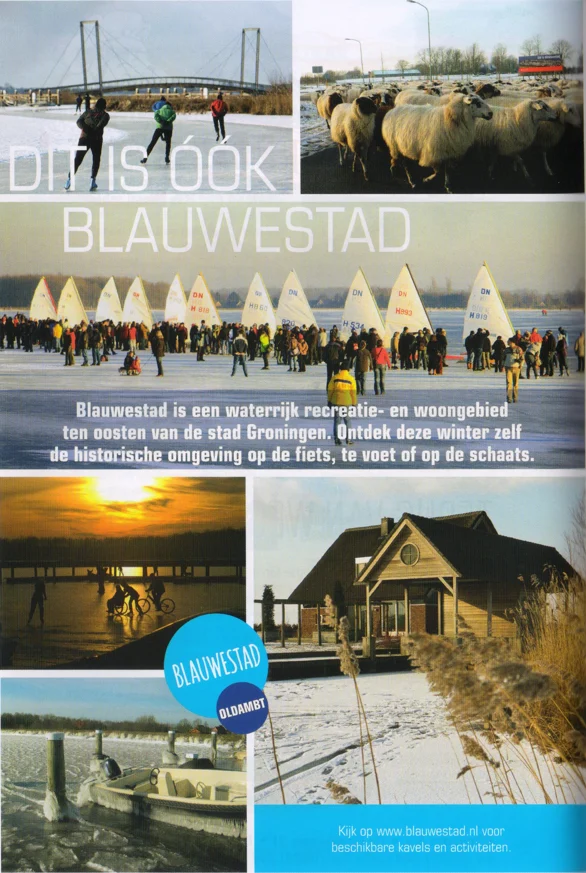
By placing this advertisement in the FC Groningen programme, the developers were executing a targeted PR pivot. They were attempting to soften the project’s elitist image, reminding the skeptical Northern public that Blauwestad also offers accessible recreation, nature, and traditional winter joy. The stadium, a melting pot of all social classes, was the perfect place to try and heal the rift between the ambitious project and the conservative local sentiment.
A Look into the Future
By 2026, the narrative around Blauwestad has undergone a remarkable transformation. The initial struggles and “ghost town” jokes faded as the COVID-19 pandemic and a shift towards remote work drove a massive surge in demand for spacious, nature-adjacent housing. The plots finally filled up, and the area matured into a recognized recreational hotspot. The scars of the initial land expropriation remain in local memory, but the project ultimately delivered on its promise, becoming an integral, thriving part of the Oldambt landscape.