
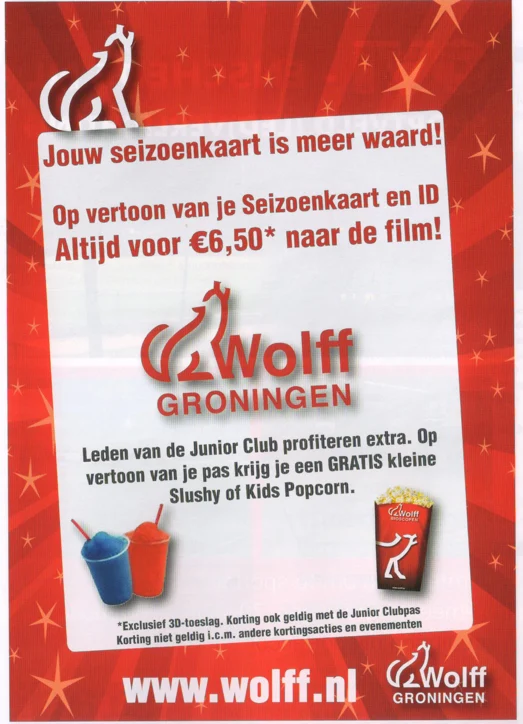
The architectural brilliance of the Euroborg was that it was never designed merely as a football pitch surrounded by seats; it was envisioned as a holistic entertainment and lifestyle complex. Page 27 of the matchday programme provides a perfect example of this commercial synergy, featuring a bright, colorful advertisement for the Wolff Groningen cinema, located directly within the stadium’s concrete belly.
The ad promotes a clever cross-pollination of audiences: season ticket holders were offered a discounted cinema ticket for just €6.50. Furthermore, members of the club’s kids’ association were enticed with vouchers for a free, vibrantly colored popcorn-slush combo. It was a brilliant, simple strategy designed to ensure that fans didn’t just come for 90 minutes on a Sunday, but spent their entire weekend—and their discretionary income—within the stadium’s commercial ecosystem.
This type of hyper-local B2C marketing was essential for the sustainability of the complex. It turned a football club into a lifestyle partner for local families. A father could watch the game, while the kids looked forward to the latest animated blockbuster right next door. It wove the fabric of the football club tightly into the everyday leisure routines of the city’s residents.
A Look into the Future
The cinematic landscape shifted heavily in the following years. The Wolff Groningen brand was eventually swallowed up in a major acquisition by the European giant Kinepolis. By 2026, the cinema remains a massive anchor tenant of the Euroborg complex, boasting upgraded laser projection and immersive seating. Yet, the foundational strategy remains identical to that modest 2015 advertisement: turning a football stadium into a multi-purpose destination where the drama on the pitch is seamlessly paired with the drama on the silver screen.