
A football matchday programme is rarely the place you expect to find high-level industrial lobbying, but in the northern Netherlands, football and energy are inextricably linked. Page 21 of the early 2013 programme features a full-page, highly technical advertisement from DNV KEMA, a global energy consulting and testing authority formed by the merger of Norwegian and Dutch heritage companies. The ad doesn’t sell a product to the average fan; it sells a macroeconomic survival strategy: “Power to Gas” voor een soepele energietransitie (“Power to Gas” for a smooth energy transition).
To understand the gravity of this ad, you have to understand the panic setting into the Groningen energy sector in 2013. Following the severe Huizinge earthquake in August 2012, public and political pressure to reduce natural gas extraction was mounting. The fossil fuel industry was facing an existential crisis. This advertisement was their intellectual counter-offensive. The text argues that the massive, existing gas infrastructure shouldn’t be abandoned. Instead, it should be used as a giant battery. By converting excess renewable electricity (from wind and solar) into gas—a process known as “Power to Gas”—the industry promised “seasonal storage” and “decarbonization of the gas infrastructure.”
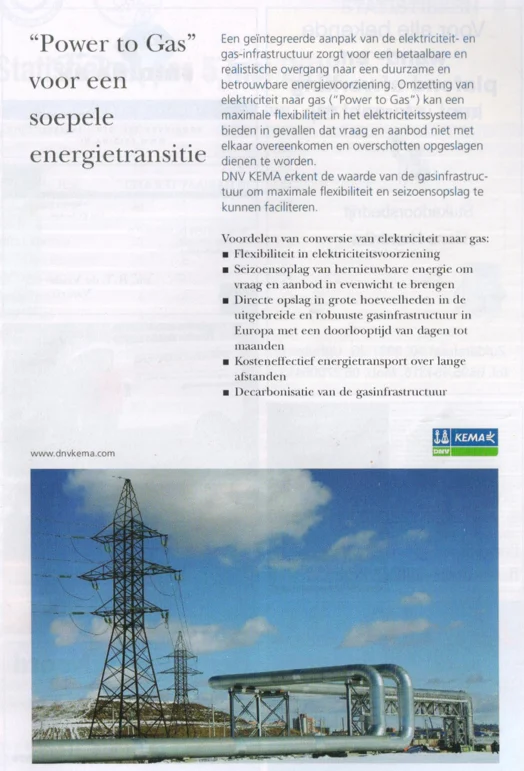
The visual is stark and industrial: high-voltage power lines running parallel to massive above-ground pipelines in a snowy landscape. Placing this highly corporate, policy-driven advertisement in the FC Groningen programme was a calculated move. The business lounges of the Euroborg were the ultimate networking hub for regional politicians, energy executives, and industrial contractors. DNV KEMA was using the unifying platform of the local football club to whisper directly into the ears of the region’s decision-makers: Don’t kill the pipelines; we can make them green.
A Look into the Future
Looking back from the vantage point of 2026, this advertisement is a stunningly accurate prophecy, even if the context changed drastically. The political battle to save natural gas extraction was lost; the Groningen gas field was officially shut down due to the devastating impact of the earthquakes. However, the technological pitch made by DNV KEMA (now known simply as DNV) absolutely won. Today, the concept of “Power to Gas” has evolved into the massive Green Hydrogen (Groene Waterstof) revolution. The old natural gas pipelines crisscrossing the northern provinces are currently being repurposed to transport hydrogen generated by offshore wind farms. The 2013 ad was right: the gas was the problem, but the infrastructure was indeed the key to the future.