
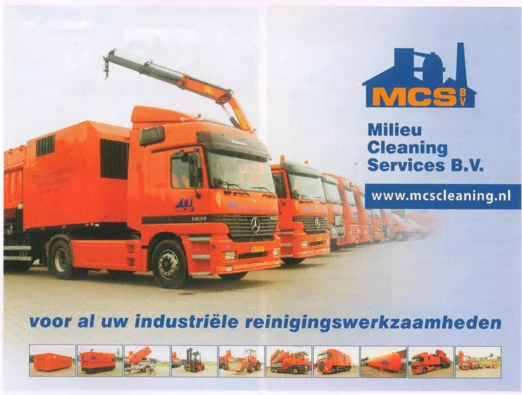
The economy of the northern Netherlands is not just built on agriculture and education; it is heavily reliant on massive, often messy, industrial infrastructure. The bottom half of page 40 features an advertisement for MCS (Milieu Cleaning Services B.V.), showcasing a formidable fleet of heavy-duty orange vacuum and cleaning trucks.
This is the gritty, unglamorous, but absolutely essential B2B reality of the region. The ports of Eemshaven and Delfzijl, along with the massive chemical plants and agricultural processing facilities scattered across the province, require constant, specialized maintenance. “Milieu” translates to Environment, and industrial cleaning is the frontline defense against ecological disasters. Whether it is cleaning massive storage tanks, handling hazardous waste spills, or maintaining factory pipelines, companies like MCS do the heavy lifting that keeps the northern economy running safely. Advertising in the FC Groningen programme was a direct line to the factory directors and logistics managers who hold the lucrative contracts for these massive industrial clean-up operations.
A Look into the Future
By 2026, the word “Milieu” (Environment) in the company’s name carries far more weight than it did in 2013. The Netherlands has faced a decade of intense environmental reckoning, from the nitrogen emission crisis (stikstofcrisis) to strict new regulations regarding PFAS and industrial runoff. Industrial cleaning is no longer just about washing out a tank; it is a highly regulated, high-tech sector focused on environmental remediation and compliance. The rugged orange trucks advertised in the 2013 programme represent the early stages of an industry that has become the vital, heavily scrutinized guardian of the northern Dutch ecosystem.