
When analyzing the commercial ecosystem of FC Groningen, it is easy to focus entirely on agriculture, construction, and natural gas. However, page 4 of the May 2014 matchday programme provides a crucial reminder of another massive pillar of the northern economy: the maritime industry. Nestled in the advertising grid is a sleek, blue-and-green ad for Bebeka.
The English-language slogan reads: “YOUR TRUSTED PARTNER IN SHIPPING.” The fine print reveals that Bebeka is an independent cooperative for the shipping industry, specializing in the worldwide purchase and supply of fuels, lubricants, and other maritime services. Located at the Taco Mesdagplein in the city of Groningen, this cooperative represents the massive logistical operations tied to the nearby seaports of Eemshaven and Delfzijl.
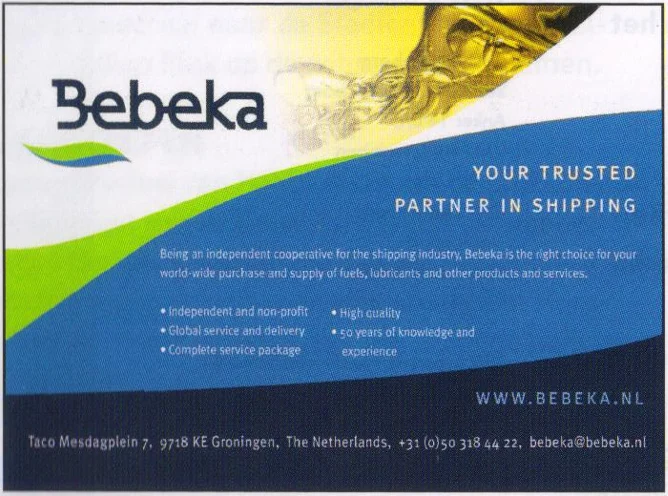
Seeing a global shipping cooperative advertise in a regional football programme highlights the unique demographic of the Euroborg business lounges. The stadium is the ultimate networking hub where agricultural magnates rub shoulders with maritime executives. The club’s identity as the “Pride of the North” encompasses not just the soil, but the sea.
A Look into the Future
The maritime sector in the northern Netherlands underwent massive transformations in the decade following this advertisement. The port of Eemshaven expanded dramatically, becoming a critical European hub for offshore wind energy logistics and data centers. Cooperatives like Bebeka had to navigate the complex transition toward cleaner maritime fuels and stricter environmental regulations. Yet, their presence in the local football ecosystem remains a constant, proving that the wealth generated by the cold waters of the Wadden Sea continues to flow into the VIP boxes of the Euroborg.