
Sometimes an advertisement is actually a warning siren. On page 27 of the programme, a full-page ad from Stichting Engineering Noord and AOT Noord features a stark, bold headline: “Er dreigt een tekort aan technici. Wacht u af? Wij niet.” (A shortage of technicians is looming. Are you waiting? We are not.).
In 2013, the Netherlands was facing a demographic time bomb in its industrial sector. The advertisement explicitly points out that a massive wave of older technicians was heading for retirement, while too few students were choosing technical education, resulting in a projected 80,000 unfilled vacancies nationwide. To combat this, these educational foundations used the FC Groningen matchday programme to target a very specific demographic: the fathers and local business owners sitting in the stands. The pitch was highly pragmatic, offering dual learning paths (working and learning) and promising that participating companies would pay a large portion of the tuition fees.
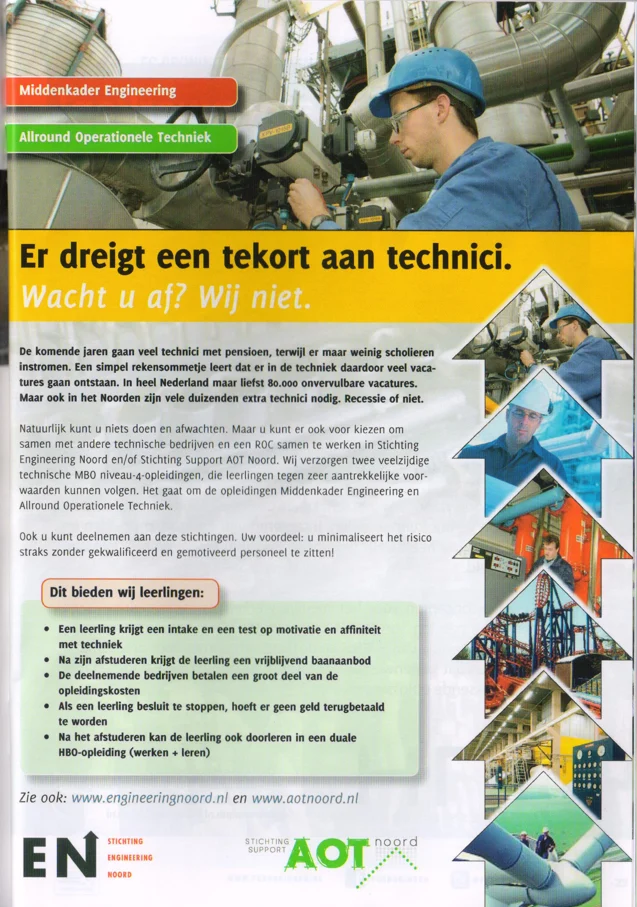
The football stadium was the perfect place for this message. The northern economy relies heavily on industry, energy, and logistics—sectors that cannot function without skilled MBO-4 (vocational) engineers. The ad was a desperate plea to the community to encourage the next generation to pick up a wrench and a hard hat instead of just a laptop.
A Look into the Future
Viewed from 2026, this 2013 advertisement was entirely correct, yet it underestimated the scale of the upcoming crisis. The “looming shortage” evolved into a full-blown national emergency. The massive acceleration of the energy transition—requiring thousands of technicians to install solar panels, heat pumps, and upgrade the electrical grid—combined with the monumental earthquake repair operations in the Groningen province, made technical personnel the most sought-after commodity in the country. The foundations that advertised in the Euroborg over a decade ago were the early responders to an industrial bottleneck that continues to define the Dutch economy today.