When a city builds a massive new football stadium on its industrial outskirts, the economic ripples extend far beyond the pitch. Page 34 of the May 2014 matchday programme provides a perfect case study of this urban regeneration through a full-page advertorial for the Groot Handels Centrum Groningen (Wholesale Center Groningen).
Located on the Osloweg, just a “stone’s throw from the Euroborg,” this massive 50,000-square-meter business complex was originally built in 1972. For years, it had suffered from neglect and a poor image. However, the advertorial details a massive revitalization effort led by real estate developer Brivec BV, alongside brokers DTZ Zadelhoff and Kooistra Feenstra. “The location is very well known in the region; everyone knows the Wholesale Center, if only because you never have to explain the way to your company,” notes broker Erik Paas.
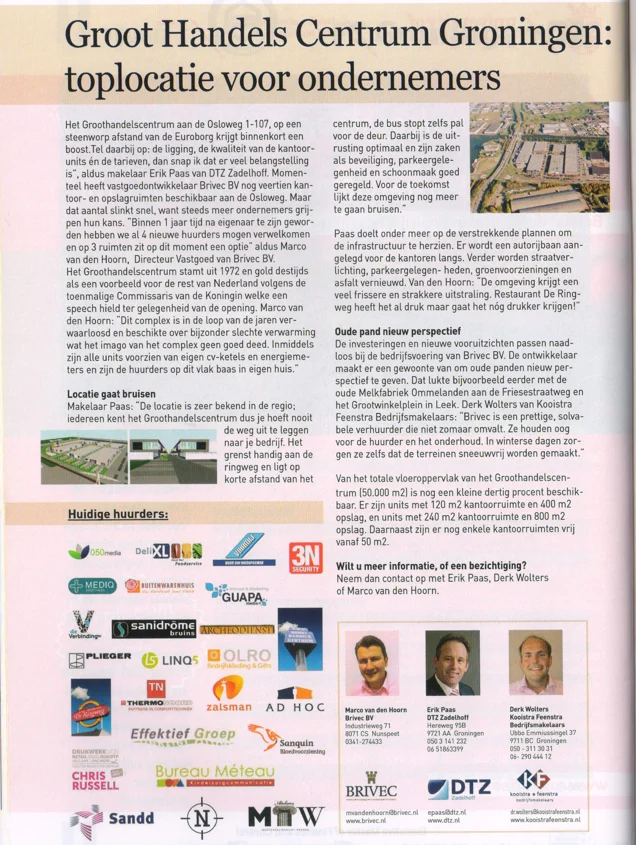
The article is a direct pitch to the VIPs and business owners sitting in the stadium lounges. It highlights new infrastructure, better security, and a fresh appearance. But the underlying message is clear: the presence of the modern Euroborg stadium nearby had turned a forgotten 1970s industrial estate back into a premium, highly desirable B2B location. The football club wasn’t just entertaining the city; it was actively reshaping its commercial geography.
A Look into the Future
The revitalization of the areas surrounding the stadium continued aggressively over the next decade. By 2026, the entire zone around the Euroborg (the Europapark district) has transformed into a dense, vibrant mix of modern offices, educational institutions, and residential towers. The Groot Handels Centrum Groningen successfully rode this wave of urban renewal. This 2014 advertorial captures the exact transitional period when the gritty industrial past of the neighborhood began to merge with its sleek, commercially vibrant future, all anchored by the gravity of the football stadium.