
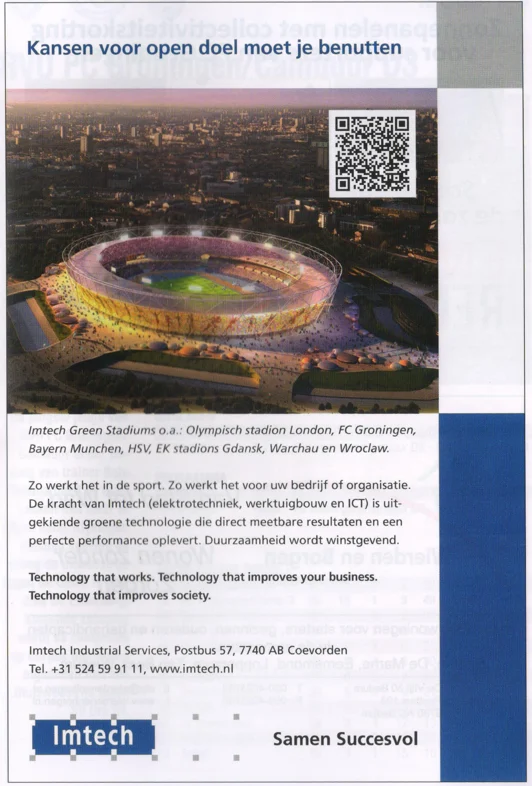
We previously noted the Imtech logo on the kit sponsor page, but page 65 of the 2013 matchday programme delivers a full-page manifesto of their corporate ambition. Under the football-themed headline “Kansen voor open doel moet je benutten” (You must take chances in front of an open goal), the advertisement promotes “Imtech Green Stadiums.”
Visually, the ad is stunning: a glowing, futuristic stadium set against a twilight sky, complete with a QR code. The text is a masterclass in corporate boasting. Imtech proudly lists its involvement in massive international infrastructure projects, including the Olympic Stadium in London, Bayern Munich’s arena, and the Euro 2012 stadiums in Gdansk, Warsaw, and Wroclaw. They align these global triumphs with their work at the Euroborg, promising that their “green technology” delivers direct, measurable results and makes sustainability profitable. The ad directs readers to their Industrial Services branch in Coevorden. In May 2013, this advertisement projected an image of an unstoppable, highly ethical, and technologically advanced European juggernaut.
However, for a financial historian, this page is dripping with dark irony. The very regions they boast about in this ad—specifically Germany and Poland—were the exact locations where massive, systemic financial fraud was currently being covered up by Imtech executives.
A Look into the Future
Viewed from 2026, this advertisement is a monument to corporate hubris. Just two years after this programme was distributed to the fans in the Euroborg, the Imtech empire collapsed in one of the most spectacular and devastating bankruptcies in Dutch history. The “Green Stadiums” pitch and the slogan “Samen Succesvol” (Successful Together) were revealed to be part of a massive facade built on falsified contracts and hidden losses. The company was dismantled and sold off in pieces. Today, this glossy, expensive advertisement serves as a chilling historical reminder that in the corporate world, the loudest boasts often hide the deepest cracks.