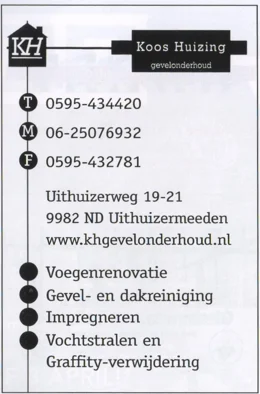
There is a subtle, almost poetic irony hidden in the advertising columns of football programmes. Football culture, especially the hardcore ultra scene, is heavily associated with urban graffiti, stickers, and street art. Yet, on page 32 of the 2013 programme, we find an advertisement for Koos Huizing gevelonderhoud, a company specializing in exactly the opposite: “Graffity-verwijdering” (Graffiti removal) and facade cleaning.
Based in Uithuizermeeden, a village in the far north of the province, this company represents the constant, quiet maintenance required to keep Dutch cities looking pristine. Advertising graffiti removal in a football stadium is a brilliant piece of targeted B2B marketing. The stadium is filled with real estate owners, municipal contractors, and local business managers who constantly battle urban decay on their commercial properties. Koos Huizing offered a comprehensive solution: joint renovation, impregnation, and high-pressure cleaning, ensuring that the physical face of the local economy remained spotless.
A Look into the Future
In 2026, the battle between street artists and facade cleaners continues unabated, but the technology has changed. Modern graffiti removal relies heavily on eco-friendly, biodegradable solvents and laser cleaning technology, moving away from the harsh chemicals of the past. Furthermore, many municipalities, including Groningen, have adopted a more nuanced approach, designating legal street art zones to reduce illegal tagging. Yet, for commercial real estate, the services of rural maintenance companies like the one from Uithuizermeeden remain an absolute necessity in the ongoing cycle of urban renewal.