
A football stadium is only as powerful as the infrastructure that connects it to its people. On page 20 of the February 2014 matchday programme, nestled among ads for metalworkers and dentists, is an advertisement that represents the literal lifeblood of the club’s regional support: the OV-bureau Groningen Drenthe public transport network.
The ad promotes a “Dal-Dagkaart” (Off-peak day ticket) for just €10, with the inviting slogan: “Samen een dagje uit? Ontdek Groningen en Drenthe met de bus” (A day out together? Discover Groningen and Drenthe by bus). For the thousands of fans living in the rural villages of the Drenthe province or the outer edges of Groningen, this bus network is the primary artery to the Euroborg.
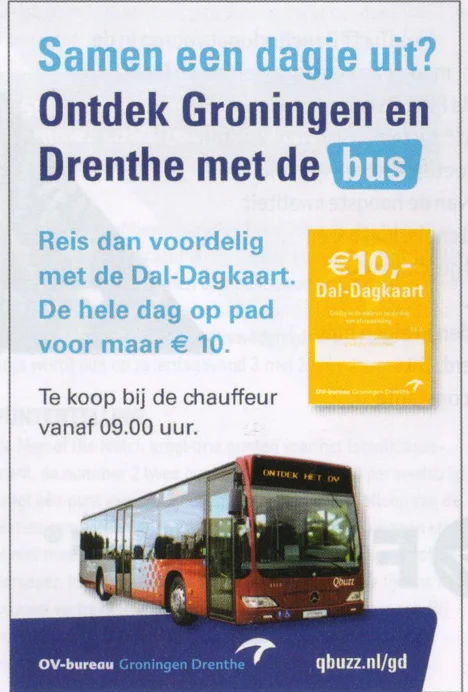
Advertising affordable public transport in the matchday booklet is a direct acknowledgment of the club’s demographic. Not everyone drives, and parking around the stadium can be a nightmare. The €10 bus ticket allowed fathers and sons from distant villages to make the bi-weekly pilgrimage to the city, ensuring that the Pride of the North remained accessible to the working-class families of both provinces.
A Look into the Future
Public transport remains the critical connective tissue of the northern Netherlands. By 2026, the diesel bus pictured in this 2014 advertisement has largely been replaced by a sleek, silent fleet of electric and hydrogen-powered buses, reflecting the region’s aggressive push toward sustainability. However, the core mission of the OV-bureau Groningen Drenthe remains unchanged: providing affordable, reliable transport that allows the rural hinterland to converge on the Euroborg every other weekend.