
A matchday programme is much more than a football booklet; it is a socio-economic time capsule. The advertising pages of the August 2013 FC Groningen vs FC Utrecht edition provide a fascinating snapshot of the local business ecosystem that kept the club’s commercial wheels turning, reflecting both the daily life of the fans and the broader industrial shifts in the northern Netherlands.
On page four, nestled next to the manager’s column, sits an advertisement for Drenth Zonnepanelen. In 2013, solar energy was gaining traction, but it had not yet become the absolute necessity it is today. This ad is a subtle, early indicator of the growing green energy transition in the province of Groningen—a region that would soon face intense socio-political upheaval due to the earthquakes caused by natural gas extraction. Local businesses like Drenth were at the forefront of offering residents an alternative, sustainable path.
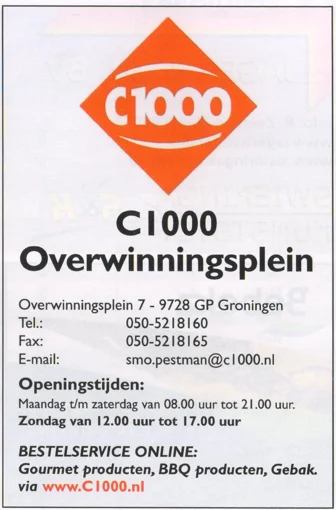
But page seven offers a completely different kind of nostalgia—a pure slice of daily Dutch life. The prominent ad for the C1000 supermarket located at the Overwinningsplein is a direct portal to the past for local fans. Alongside it, ads for the beloved Sportcentrum Kardinge and local metalworkers Kamphuis Metaalwerken paint a picture of a tight-knit community. These weren’t just faceless corporations; these were the places where fans bought their matchday snacks, took their kids swimming, and earned their living.
A Look into the Future
The most dramatic disappearance from these pages isn’t a footballing figure—it’s the C1000 supermarket. Once the second-largest supermarket chain in the Netherlands, C1000 was completely bought out and phased out of existence by 2015, its stores rebranded as Jumbo or Albert Heijn. Seeing the bright orange logo at the Overwinningsplein in this programme is a stark reminder of how quickly the urban and commercial landscape of the city evolves. Meanwhile, the solar panel industry teased by Drenth Zonnepanelen would explode in the late 2010s, becoming a massive economic driver for the region as Groningen officially began its complex pivot away from fossil fuels.