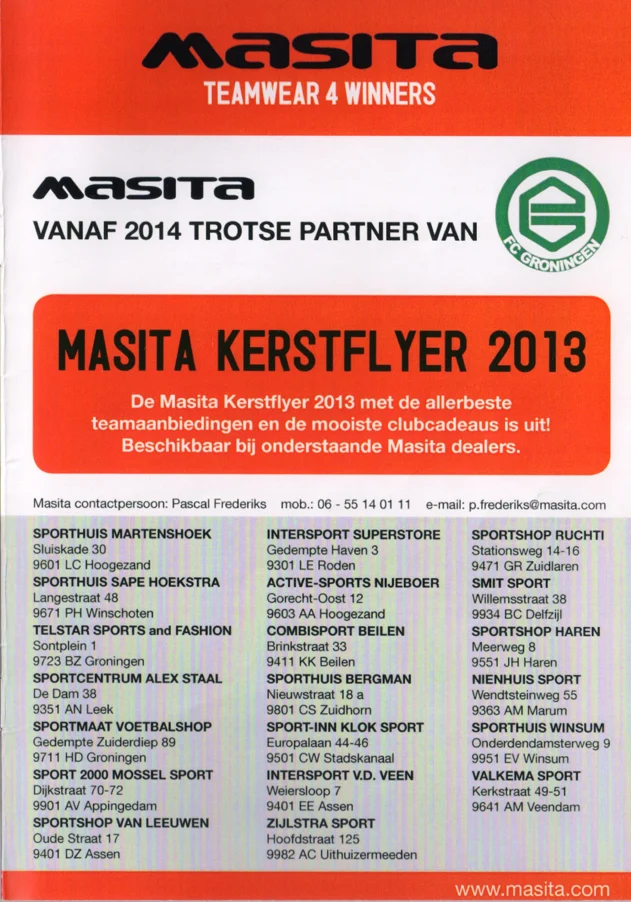
The announcement of a new kit supplier is always a major commercial milestone for a football club. On page 17 of the October 2013 cup programme, FC Groningen proudly introduced their future technical partner to the fans. A full-page advertisement for the Dutch sportswear brand Masita boldly declares: “VANAF 2014 TROTSE PARTNER VAN FC GRONINGEN” (From 2014 proud partner of FC Groningen).
The advertisement is a fascinating look at how sports retail operated before the total dominance of online club webshops. To promote their 2013 Christmas flyer, Masita didn’t just list a website; they listed a massive, dense network of 18 independent local sports shops across the northern provinces. From Sporthuis Martenshoek in Hoogezand to Sportshop Haren and Sport-Inn Klok Sport in Stadskanaal, this ad proves that the distribution of football gear relied heavily on a tight-knit web of local, physical retailers. Masita was positioning itself as a brand deeply embedded in the regional grassroots sports community.
However, for football historians, this advertisement carries a heavy sense of impending doom. The partnership announced so proudly on this page would soon turn into an absolute logistical nightmare for the Pride of the North.
A Look into the Future
The Masita era at FC Groningen was disastrously short-lived. In December 2014, just months after officially taking over as the club’s kit supplier for the historic cup-winning season, Masita went bankrupt. The collapse of the brand caused massive supply chain issues for the club, leaving fans unable to buy replica shirts and forcing the team to scramble for training gear. The club eventually had to terminate the contract and sign an emergency deal with Robey Sportswear. Looking back at this optimistic, bright orange advertisement from 2013, it stands as a tragic corporate artifact—a promise of a glorious partnership that ended in empty shelves and legal chaos.