
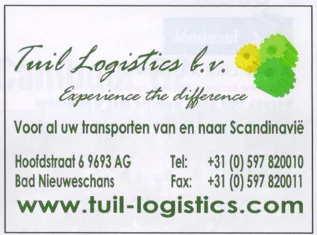
The commercial reach of FC Groningen maps perfectly onto the strategic logistical arteries of the northern Netherlands. In the top right corner of page 57, a clean, green-and-white advertisement for Tuil Logistics b.v. highlights a very specific and vital trade route.
The company’s address is what makes this ad geographically fascinating: Hoofdstraat 6 in Bad Nieuweschans. This small town is the absolute easternmost point of the Netherlands, sitting directly on the border with Germany. It is the literal gateway out of the country. Tuil Logistics proudly advertises its specialty: “Voor al uw transporten van en naar Scandinavië” (For all your transport to and from Scandinavia). The northern Dutch economy is deeply intertwined with the Nordic countries, exporting agricultural technology, chemicals, and machinery. By advertising in the Euroborg, a logistics firm based on the German border was directly targeting the regional manufacturers who needed a reliable partner to push their goods up into Denmark, Sweden, and Norway.
A Look into the Future
Looking back from 2026, the logistics corridor to Scandinavia has become one of the most heavily regulated and technologically advanced shipping routes in Europe. Driven by strict EU emissions targets, the transport sector has had to rapidly transition towards electric trucks and green-fueled ferry connections. Bad Nieuweschans remains a vital, strategic chokepoint for this international trade. The local transport companies that survived the turbulent economic shifts of the last decade did so by mastering these complex, cross-border green logistics, proving that the rural border towns of the North are actually highly connected international hubs.