
Football is a gloriously messy business. When the final whistle blows and twenty thousand passionate fans filter out of the Euroborg, they leave behind a staggering landscape of crushed plastic beer cups, peanut shells, discarded flyers, and spilled mustard. Before the stadium can host its next corporate event or match, an invisible army must mobilize. This is where companies like Asito step into the spotlight.
In the top left corner of page 46, an advertisement for Asito Groningen B.V., based on the Bornholmstraat, proudly promotes its “schoonmaakkracht®” (cleaning power). The ad features two cheerful cleaners in bright orange workwear, looking out from behind freshly cleaned glass. While Asito is a massive national player in the Dutch facility management sector, their localized advertising in the FC Groningen programme was a highly targeted B2B strategy. The VIP lounges of the stadium are packed with office directors, school board members, and real estate managers. By maintaining a visible presence in the matchday booklet, Asito ensured they were the first name these executives thought of when their own commercial buildings needed maintenance.
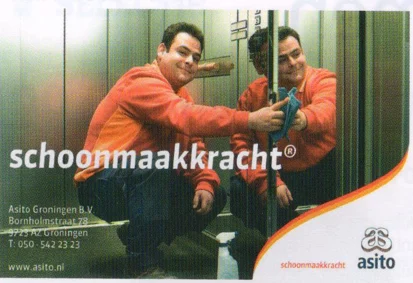
Advertising a cleaning company in a football programme is also a subtle nod to the working-class roots of the sport. The men and women who clean the offices, schools, and stadiums of the northern Netherlands are often the very same people standing in the passionate fan sections on a Sunday afternoon.
A Look into the Future
By 2026, Asito remains a dominant and highly visible force in the Dutch cleaning industry, but the societal perception of their workforce has undergone a profound shift. During the global pandemic of the early 2020s, cleaners were suddenly elevated from “invisible labor” to absolute essential workers, critical for public health and safety. Today, the industry has moved away from after-hours, hidden cleaning towards “daytime cleaning,” ensuring that the people doing this grueling, essential work are seen and respected by the office workers they clean up after. Furthermore, the harsh chemicals of 2013 have largely been replaced by sustainable, probiotic cleaning solutions, proving that even the most traditional blue-collar industries in Groningen have embraced the green transition.