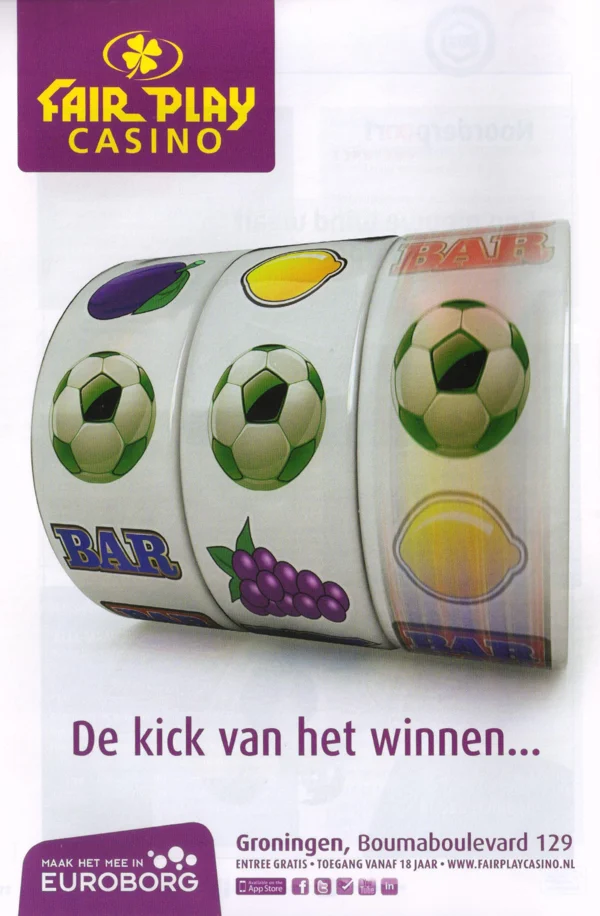
When FC Groningen moved from the beloved, gritty Oosterpark to the ultra-modern Euroborg in 2006, the club didn’t just build a football pitch; they built a massive, multi-purpose commercial ecosystem. Page 72 of the May 2013 matchday programme perfectly illustrates this with a full-page advertisement for Fair Play Casino.
The ad features a slot machine rolling footballs instead of cherries, accompanied by the slogan “De kick van het winnen…” (The kick of winning). But the most important detail is the address at the bottom: Boumaboulevard 129. This wasn’t a casino in the city center; it was physically integrated into the stadium complex itself. The strategy was clear: capture the fans’ adrenaline and disposable income before and after the 90 minutes on the pitch. If the team won, fans could celebrate at the roulette table. If the team lost, they could try to win back their mood at the slot machines. The stadium was designed to be a self-contained weekend destination, blending sports, hospitality, and gambling into one concrete cathedral.
A Look into the Future
By 2026, the relationship between professional football and the gambling industry in the Netherlands has undergone a radical, highly legislated transformation. Following an explosion of online betting apps, the Dutch government implemented strict bans on untargeted gambling advertisements, forcing clubs to phase out betting sponsors from their shirts and stadiums. While physical venues like the casino at the Boumaboulevard still operate under strict regulations, the era of openly blending the “kick” of a football match with the pull of a slot machine in a family-friendly matchday programme is definitively over. This 2013 ad represents the peak of the unregulated synergy between local football and the gambling industry.