
To truly understand the B2B advertisements in a 2013 matchday programme, you have to remember the macroeconomic climate of the time. The Netherlands was still clawing its way out of the devastating aftermath of the 2008 global financial crisis and the subsequent Eurozone debt crisis. For Small and Medium-sized Enterprises (SMEs), getting a traditional bank loan to build a new warehouse or buy equipment was notoriously difficult. Banks had tightened their belts, leaving many local entrepreneurs stranded.
Enter Credion, whose large blue advertisement dominates the bottom half of page 57. Their pitch is highly specific to this era of financial anxiety: “Credion biedt realisatiekracht om uw financiering rond te krijgen” (Credion offers the realization power to get your financing done). Acting as independent financial brokers, they promised to negotiate with over 50 different lenders to secure capital for businesses when traditional banks said no. The ad features an image of an empty, unfinished industrial building—a powerful visual metaphor for stalled business ambitions. By placing this ad in the FC Groningen programme, Credion (represented locally by Marcel Doorbos) was speaking directly to the frustrated business owners in the sponsor lounges who had the vision to expand but lacked the credit to do so.
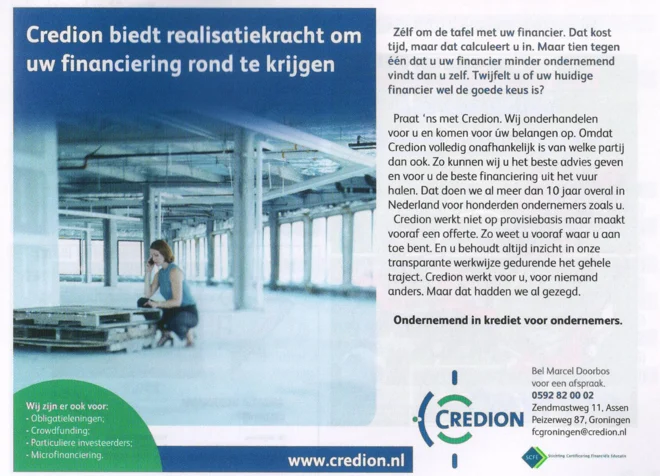
Interestingly, the small print in the green box at the bottom left lists their services, including “Crowdfunding” and “Particuliere investeerders” (Private investors). In 2013, crowdfunding for B2B real estate was still a relatively novel concept, showing that these brokers were actively pushing alternative finance.
A Look into the Future
By 2026, the financial landscape for SMEs has completely transformed. The alternative financing methods that Credion was pioneering in 2013—such as corporate crowdfunding, direct lending, and fintech credit platforms—have become entirely mainstream, permanently breaking the monopoly of the traditional big banks. The credit crunch of the early 2010s forced the northern Dutch economy to become more creative and resilient in how it funded its growth. The financial advisors who navigated those dark waters in 2013 helped build the robust, diversified economic foundation that the Groningen region relies on today.