
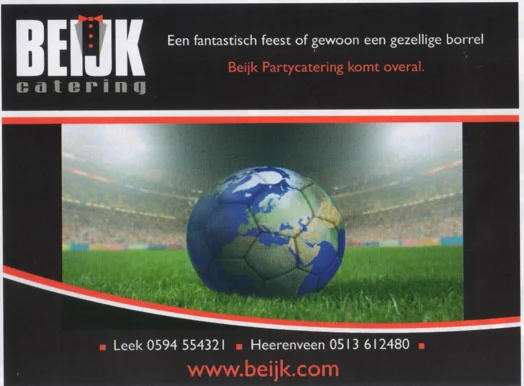
While the players provide the entertainment on the pitch, the matchday experience in the sponsor lounges and public concourses is fueled by a massive, unseen logistical engine: the catering industry. On page 24 of the May 2013 programme, a sleek, black advertisement for BEIJK Catering catches the eye, promising “Een fantastisch feest of gewoon een gezellige borrel” (A fantastic party or just a cozy drink).
BEIJK Catering is a heavyweight in the northern hospitality sector. The advertisement proudly lists their operational hubs in Leek (just west of Groningen) and Heerenveen (in neighboring Friesland). For a company of this scale, advertising in the FC Groningen matchday programme was a highly effective B2B strategy. The stadium’s business clubs are packed with corporate directors and office managers who are constantly organizing company parties, corporate events, and large-scale meetings. By maintaining a visible presence in the football club’s commercial ecosystem, BEIJK ensured that when a local CEO needed to feed 500 employees, their name was already familiar.
By 2026, the catering and events industry has weathered immense storms, most notably the total shutdown of public events during the early 2020s pandemic. Companies like BEIJK Catering had to demonstrate incredible resilience, often pivoting to high-end home delivery or specialized corporate care packages to survive. Today, the industry is heavily focused on sustainability, local sourcing, and reducing food waste. The traditional “gezellige borrel” advertised in 2013 remains a cornerstone of Dutch corporate culture, but the logistics behind it have become greener and far more technologically advanced.