
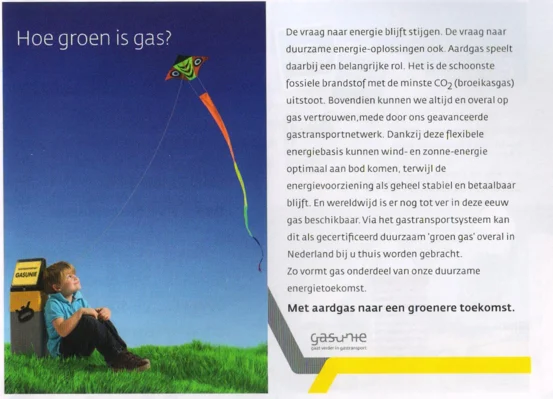
Page 11 of the 2012-13 matchday programme features an advertisement that carries immense historical and emotional weight for the northern Netherlands. Taking up the top half of the page is a campaign by Gasunie, the Dutch state-owned natural gas infrastructure company. The ad features a child flying a kite in a green field, accompanied by a bold, provocative question: “Hoe groen is gas?” (How green is gas?).
In early 2013, the narrative surrounding the massive Groningen gas field was beginning to fracture, but the corporate messaging was still firmly on the offensive. The text of the ad argues that natural gas is the “cleanest fossil fuel” and a vital, flexible component of the transition to sustainable energy. It introduces the concept of certified “green gas” being transported through their network, concluding with the slogan: “With natural gas towards a greener future.” Placing this ad in the FC Groningen programme was a strategic move to maintain social license and goodwill among the local population, whose land sat directly above Europe’s largest gas reserve.
However, the timing of this advertisement is chilling in retrospect. Just months prior, in August 2012, the region was hit by the Huizinge earthquake (measuring 3.6 on the Richter scale)—the heaviest induced earthquake in Dutch history. Public anger was simmering, and the PR push to frame gas as “green” and “safe” was about to collide with a harsh geological reality.
A Look into the Future
Viewed from 2026, this advertisement is a relic of a collapsed narrative. The escalating seismic damage to homes, farms, and historical buildings eventually forced the Dutch government to make the historic decision to completely shut down the Groningen gas field. The parliamentary inquiry that followed exposed decades of prioritizing revenue over citizen safety. Today, Gasunie has entirely pivoted its public identity towards hydrogen and heat networks. The idea of advertising natural gas as a “green future” to the people of Groningen—many of whom spent the next decade fighting for compensation for ruined homes—now feels like a dispatch from an alternate reality.