
In the final regular-season matchday programme of 2013/2014, we documented the agonizing heartbreak of Jong FC Groningen (the reserves). They had finished tied on points with Jong Vitesse at the top of the Beloftencompetitie Divisie A, but lost the championship purely on goal difference. However, page 17 of the May 7 playoff edition reveals a massive, scandalous plot twist to that story.
Under the “JONG FC GRONINGEN” header, the text drops a bombshell: “De aanklager betaald voetbal opende echter een vooronderzoek naar een mogelijk ongerechtigde dispensatiespeler bij Jong Vitesse.” (The professional football prosecutor, however, opened a preliminary investigation into a potentially ineligible dispensation player at Jong Vitesse).
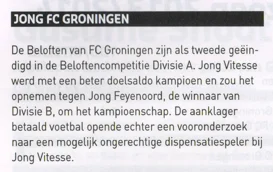
If Vitesse was found guilty of fielding an ineligible over-age player during the season, they faced points deductions. This meant that Jong FC Groningen, who thought they had lost the title by a margin of four goals, could suddenly be crowned champions in the courtroom and take Vitesse’s place in the national championship match against Jong Feyenoord. It was a stunning administrative drama unfolding right as the first teams of Groningen and Vitesse were preparing to face each other in the European playoffs on the pitch.
A Look into the Future
The drama of the Beloftencompetitie highlighted the chaotic, often poorly regulated nature of the isolated reserve leagues during that era. The rules regarding “dispensation players” (first-team players dropping down to get minutes) were frequently abused or misunderstood. Ultimately, the KNVB radically restructured the entire Dutch football pyramid shortly after this season, forcing professional reserve teams to integrate into the senior leagues (like the Keuken Kampioen Divisie) with much stricter, transparent roster rules, ensuring that championships would be decided on the grass, not by prosecutors investigating paperwork.