
If you want to understand the brutal, character-building reality of youth football, you only need to read one paragraph on page 55 of the December 2013 matchday programme. The section dedicated to the FC Groningen C1 team (Under-15s), managed by Hugo Alves Velame, documents a two-week period of absolute emotional whiplash.
The text bluntly states: “The C1 of trainer Hugo Alves Velame has put two extreme results on the board in the past weekends.” First, the young Groningen talents experienced pure footballing euphoria, dismantling Almere City with a staggering 7-0 victory. They must have felt invincible. But exactly one week later, they traveled to Amsterdam to face the mighty Ajax academy. The result? A crushing, humbling 8-0 defeat.
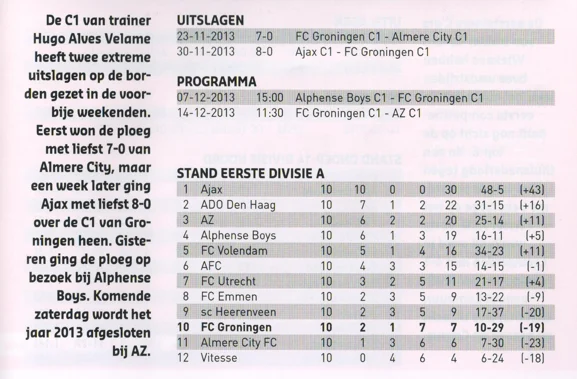
For a 14-year-old boy dreaming of a professional career, experiencing a 15-goal swing in fortunes over 14 days is a massive psychological test. This page perfectly illustrates the immense gap that existed between regional academies and the elite Ajax youth machine, but more importantly, it highlights the primary job of an academy coach: teaching kids how to process both spectacular success and devastating failure.
A Look into the Future
In youth football, results are secondary to development. The boys who suffered that 8-0 defeat in Amsterdam had to learn resilience quickly if they wanted to survive the academy system. By 2026, the players in that C1 team photo are in their mid-twenties. While only a fraction of them made it to the professional ranks, the psychological lessons learned during those extreme weekends in 2013 undoubtedly shaped their adult lives. It is a printed reminder that the path to the Euroborg pitch is paved with harsh lessons.