
When you look at the “Sponsor of the Match” page in a football programme, you typically expect to see a local construction firm or a regional bank. But on page 26 of the April 2014 edition, FC Groningen proudly presented a very different kind of sponsor: the massive Dutch traveling music festival, De Vrienden van Amstel Zingen Hun Helden (The Friends of Amstel Sing Their Heroes).
The full-page advertisement announces that for the second year in a row, the massive music spectacle would touch down on “P2 terrein van Euroborg”—one of the stadium’s sprawling parking lots. Scheduled for May 31, 2014, just weeks after the Eredivisie season concluded, the event promised a three-hour live show featuring an absolute powerhouse lineup of Dutch pop music: Ilse DeLange, Nick & Simon, VanVelzen, Waylon, Nielson, and Xander de Buisonjé. But the true commercial genius of this page lies in the middle column, titled “FC GRONINGEN VIP ARRANGEMENTEN”.
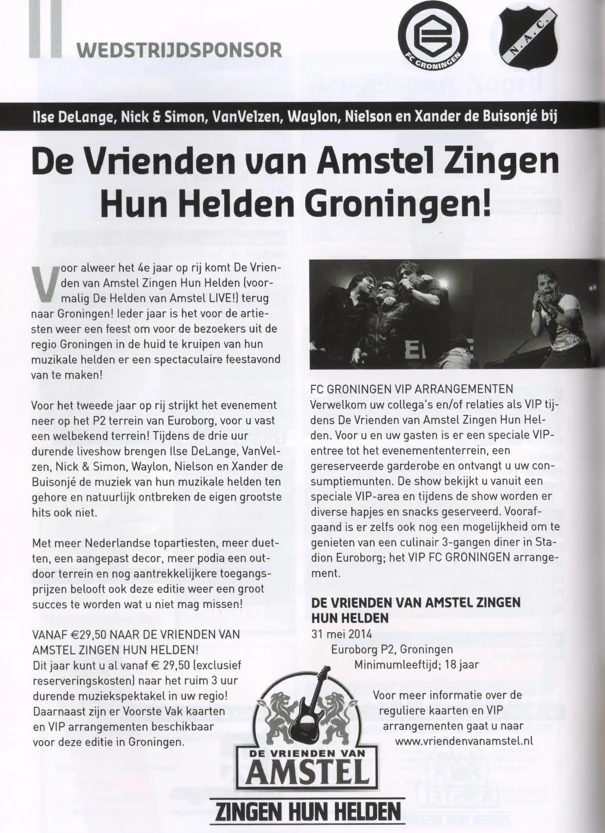
The club wasn’t just passively renting out its asphalt to a festival organizer; it was actively monetizing its own stadium infrastructure. The ad offers fans a special VIP package: before walking out to the parking lot for the concert, guests would enjoy a culinary 3-course dinner inside the Euroborg stadium itself, complete with a reserved wardrobe and exclusive VIP area access. It is a masterclass in maximizing the utility of a football stadium. The club transformed its hospitality lounges into a premium restaurant for a pop concert, ensuring the cash registers kept ringing long after the football season had ended.
A Look into the Future
The strategy of turning the Euroborg footprint into a multi-purpose entertainment hub was highly successful and paved the way for the total transformation of the surrounding area. By 2026, the concept of stadiums hosting mega-concerts in the off-season is standard practice across Europe, but Groningen was highly proactive in utilizing its immediate surroundings (like the P2 parking lot) for massive cultural events. Today, the area around the stadium has been heavily developed into a dense urban district, meaning the days of throwing a massive, loud outdoor music festival on a barren parking lot right next to the stadium are largely a nostalgic memory of the 2010s.