
If you want to understand the physical, combative nature of FC Groningen during the early 2010s, you don’t need to watch hours of tactical footage; you just need to read one small statistical block on page 21 of the December 2013 matchday programme. Tucked away under the “Wedstrijdfeiten” (Match Facts) is a headline that defies belief: “SERIE VAN 71 DUELS MET KAARTEN” (Streak of 71 duels with cards).
The text explains that during the previous away match against NAC Breda, defender Stefano Magnasco received the only yellow card of the evening for Groningen. While a single yellow card is usually unremarkable, this specific booking kept an absolutely insane statistical streak alive. The programme proudly (or perhaps infamously) notes: “Because of this, a streak remains intact of 71 league matches in which FC Groningen has received at least one yellow card. A unique series.”
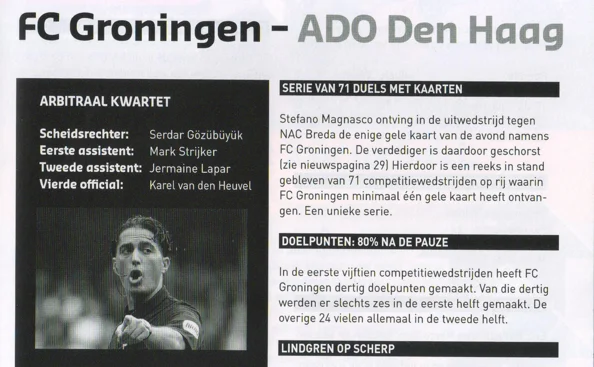
To put this into perspective, 71 matches equates to over two full Eredivisie seasons. For more than two years, across multiple managers and dozens of different referees, FC Groningen had not managed to play a single 90-minute game of football without committing a foul deemed worthy of a booking. It is a staggering testament to the aggressive, uncompromising, and sometimes reckless style of play that defined the team during this era. They were, quite literally, the bad boys of Dutch football.
A Look into the Future
All streaks eventually come to an end, and this “unique series” was no exception. As manager Erwin van de Looi continued to refine his tactical setup, the team slowly learned to channel their aggression more intelligently, relying on structured pressing rather than desperate, late tackles. The squad that eventually won the KNVB Cup in 2015 was still physically imposing, but they had shed the reckless indiscipline that fueled this 71-match streak. Looking back at this 2013 programme, it stands as a hilarious, slightly shocking monument to a very specific, very bruising era of northern football.