If a football matchday programme is a mirror of society, then the local advertisements are its cultural encyclopedia. Tucked away in the margins of the 2013 FC Groningen booklets is a recurring, brightly colored advertisement for onlinepartyverhuur.nl (Online Party Rental). To an outsider, it looks like a standard ad for bouncy castles. But to anyone familiar with Dutch provincial life, this small graphic is a concentrated dose of pure, unadulterated national heritage.
The items listed and pictured in this ad represent the holy trinity of Dutch neighborhood celebrations. First, there are the inflatable Abraham and Sarah dolls. In the Netherlands, turning 50 is a monumental milestone; men are said to “see Abraham” and women “see Sarah.” It is a mandatory tradition for friends and family to place a giant, often comical inflatable doll in the front yard of the birthday victim for the whole street to see. Next to them is the “Ooievaar” (Stork) and “Baby”—massive inflatables rented to announce a newborn child to the neighborhood.
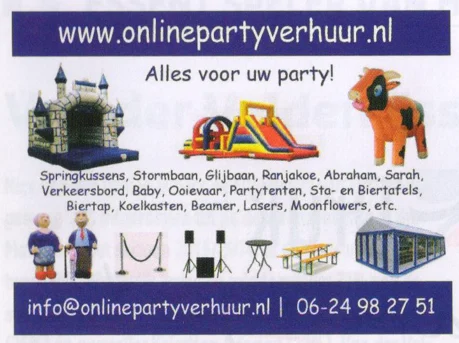
But the absolute crown jewel of this advertisement is the “Ranjakoe” (Ranja Cow). Pictured in the top right, this is an inflatable cow designed for children’s parties. Instead of milk, you fill it with ranja (a traditional Dutch fruit syrup mixed with water), and kids literally “milk” the lemonade out of the cow’s udders. It is a bizarre, brilliant, and deeply nostalgic staple of northern youth culture.
Coupled with the practical rentals of a “Biertap” (beer tap) and “Partytenten” (party tents), this ad provides the exact blueprint for a classic Dutch buurtfeest (neighborhood block party). These were the exact setups used by fans in their backyards to celebrate a big FC Groningen win or to host a barbecue before cycling to the Euroborg.
A Look into the Future
By 2026, the event rental industry has become highly digitized and professionalized, with sleek aesthetic setups dominating Instagram feeds. Yet, the core traditions advertised here remain absolutely indestructible. You can walk down any suburban street in the Groningen province today and still see a giant inflatable Abraham leaning against a house, or a massive stork crashing through a front window. The Ranjakoe might have become a bit of a retro novelty, but the culture of unpretentious, slightly absurd, and highly communal neighborhood partying remains a cornerstone of northern Dutch identity.