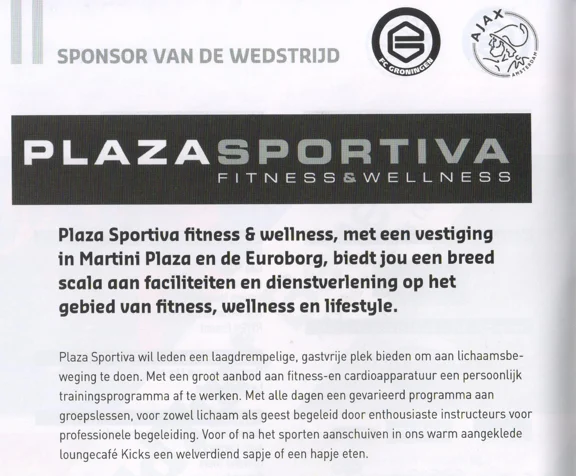
When FC Groningen left the beloved but antiquated Oosterpark stadium in 2006, the vision for their new home was radically different. The Euroborg was not designed to be a concrete bowl that sat empty for thirteen days out of a fortnight; it was engineered to be a daily, breathing hub of urban activity. Page 26 of the September 2013 matchday programme perfectly illustrates this modern stadium philosophy through a full-page advertorial for Plaza Sportiva.
The advertisement highlights that this premium fitness and wellness center has locations in both the Martini Plaza and the Euroborg. For fans reading this programme, the idea that their stadium housed a massive gym, a sauna landscape, and an 8×20 meter heated swimming pool was a point of civic pride. The ad promotes personal training, company fitness programs, and a lounge café called “Kicks.”
This integration of lifestyle and sports infrastructure meant that the football club’s footprint was woven into the daily health routines of thousands of locals. You could go to the stadium on a Tuesday morning to swim laps, sweat in a Finnish sauna, and look out over the same complex where the Pride of the North would battle Ajax on the weekend. It was the ultimate realization of the multi-purpose commercial stadium model.
A Look into the Future
The strategy to embed commercial and lifestyle businesses directly into the Euroborg complex proved to be a massive success, ensuring the financial viability of the stadium area year-round. By 2026, Plaza Sportiva remains a cornerstone of the stadium’s ecosystem, having expanded and modernized its wellness offerings. The concept of the stadium as a “daily destination” rather than just a “matchday venue” is now the standard for all new European arena builds, but this 2013 advertisement shows that Groningen was well ahead of the curve in maximizing the utility of its concrete cathedral.