
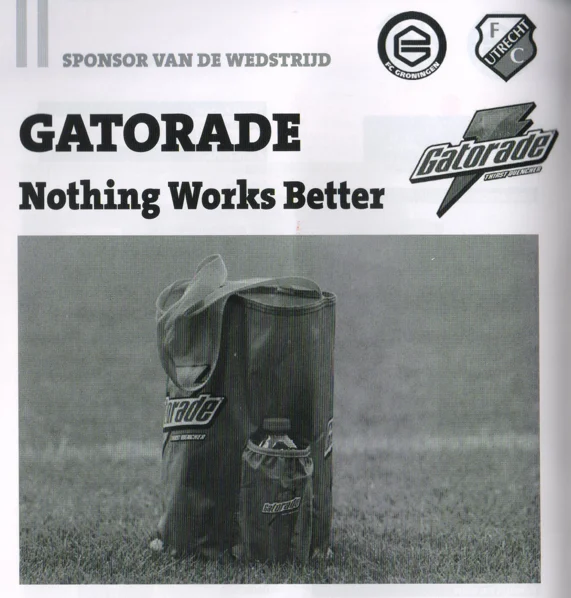
Looking back at the matchday programmes of the mid-2010s, it is fascinating to see how global mega-brands integrated themselves into the local matchday experience. For this clash against FC Utrecht, the official “Sponsor van de Wedstrijd” (Match Sponsor) was none other than the sports drink giant Gatorade.
The full-page advertisement on page 26 is a perfect time capsule of sports marketing from that era. It features the iconic, rugged green bottle carrier sitting on the pristine grass of a stadium, accompanied by a highly clinical text. “Water is the most used thirst quencher, but during sports you need more than just water,” the ad lectures the fans of FC Groningen. It speaks of 35 years of research, carbohydrates, and electrolytes—a stark contrast to the footballing days of yore when players were handed a cup of lukewarm tea at half-time and a magic sponge was the cure for all ailments.
By 2015, the professionalization of sports science had fully trickled down to the commercial side of the Eredivisie. Gatorade wasn’t just selling a beverage; they were selling the idea of peak athletic performance to the everyday fan sitting in the stands of the Euroborg. The presence of such a massive American brand as a specific match sponsor highlights the commercial pull of Dutch football during this period, where local businesses shared advertising space with global conglomerates.
A Look into the Future
Fast forward to 2026, and the landscape of football nutrition has evolved into a hyper-personalized science. Today’s players at FC Groningen don’t just grab a generic neon-colored drink from a communal carrier; they have bespoke hydration plans based on real-time biometric data, sweat analysis, and DNA profiling. While the fundamental science of electrolytes remains, the “one-size-fits-all” sports drink marketing of 2015 now feels like a charmingly retro stepping stone in the relentless evolution of modern football performance.