
Looking back at the academy pages of a 2015 matchday programme reveals a fascinating, temporary quirk of Dutch football infrastructure: Jong FC Groningen/Cambuur. Coached by Caspar Goedkoop, this joint reserve squad represented a pragmatic alliance between two northern clubs trying to bridge the gap between youth football and the professional Eredivisie level.
At the time, the “Beloften” (Reserves) league was fiercely competitive. In the spring of 2015, this hybrid northern team was locked in a tight battle for the top spot in the Beloften Divisie B against FC Utrecht, having recently played out a tense 1-1 draw. The roster was a melting pot of promising talents from both Groningen and Leeuwarden, wearing a kit that symbolically carried the weight of two proud fanbases.
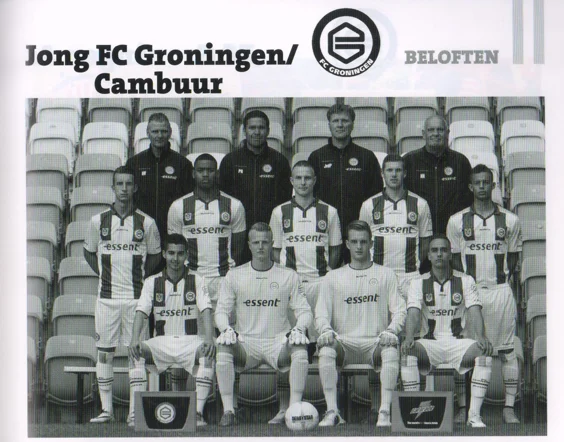
The existence of a joint team highlights the economic and logistical challenges regional clubs faced in maintaining top-tier academies. By pooling resources, FC Groningen and SC Cambuur ensured their fringe players and late developers had high-level, competitive minutes against the likes of ADO Den Haag and PEC Zwolle, rather than languishing on the bench or playing in lower-tier amateur setups.
A Look into the Future
By 2026, the landscape of Dutch reserve football has transformed completely. The KNVB’s integration of “Jong” teams into the standard football pyramid (the Keuken Kampioen Divisie and Tweede Divisie) forced clubs to professionalize and separate their reserve setups. The Groningen/Cambuur alliance was dissolved as both clubs charted their own paths to develop homegrown talent. Today, looking at a combined northern reserve team feels like a relic of a bygone era—a brief moment when regional rivals shook hands for the sake of youth development.