
The ecosystem of a football club extends far beyond the stadium turnstiles, deeply embedding itself into the city’s hospitality sector. A prime example is the classic, modest advertisement for Grand Café De Bastille, located on the busy Damsterplein. Advertising “dinner, lunch, and drinks,” this local establishment represents the hundreds of pubs and cafes that have loyally bought space in the matchday programme year after year.
In Dutch football culture, the “third half” (de derde helft)—the post-match drinking and socializing—is a sacred institution. Local bar owners know that aligning their brand with FC Groningen is the best way to secure the loyalty of the fans. De Bastille wasn’t just buying an ad; they were signaling to the green-and-white army that their doors were open for pre-match pints and post-match celebrations or sorrows.
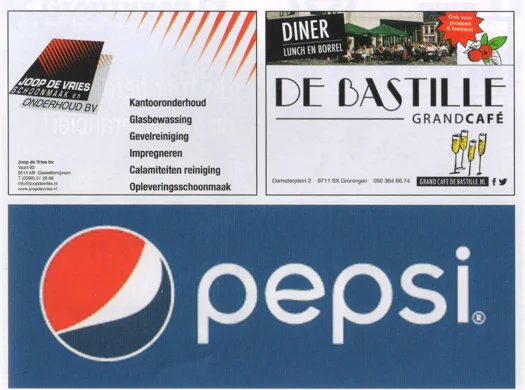
Seeing global brands like Pepsi co-branded within a small, local café’s advertisement in a regional football booklet highlights the grassroots level of sports marketing. It proves that the true financial and cultural foundation of the club rests on the shoulders of local entrepreneurs who pour the beers and fry the bitterballen every single weekend.
A Look into the Future
The hospitality industry faced unprecedented challenges in the years following 2015, radically reshaping the map of local bars and restaurants. By 2026, the area around Damsterplein has seen significant urban development, bringing in new culinary trends and craft breweries. However, the survival of authentic “brown cafes” and grand-cafes still heavily relies on the loyal football crowd. The faces behind the bar might have changed, but the post-match roar of fans discussing the referee’s decisions over a cold beer remains the soundtrack of the city.