There is a distinct, unfiltered charm in opening a sports magazine and being greeted by the image of sparking metal and heavy industrial lathes. The advertisement for Machinefabriek Dekens B.V. serves as a loud, proud declaration of the region’s industrial backbone. While modern football is increasingly sanitized and corporate, the presence of foundries and milling companies in the sponsor pool keeps the club firmly anchored to its blue-collar roots.
This is the heavy metal aesthetic of the Northern working class. Behind every advertisement of this nature are generations of mechanics, welders, and machinists who spend their weeks shaping raw steel and their weekends losing their voices in the stands. A company like Machinefabriek Dekens B.V. doesn’t advertise to sell a consumer product to the average fan; they advertise to show solidarity with the community and to establish a commanding presence in the regional B2B network.
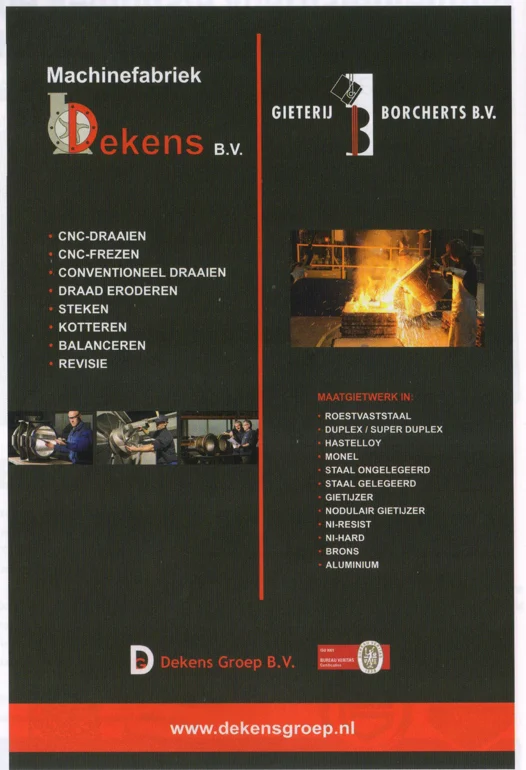
When a factory worker sees their employer’s logo in the matchday programme, it fosters a profound sense of shared identity. It sends a message that the club is built on the same sweat, precision, and hard labor that defines the local manufacturing industry. In Groningen, football is not just a game; it is an extension of the working week’s grit.
A Look into the Future
By 2026, the heavy machinery sector in the North has embraced immense technological advancements. Traditional milling has integrated with AI-driven robotics and high-tech 3D metal printing. Yet, despite the pristine, automated factory floors of today, the core ethos remains unchanged. The descendants of those traditional metalworkers still form the vocal core of the stadium, and local engineering firms continue to sponsor the club, maintaining the unbreakable bond between industry and sport.