
As you flip past the local window cleaners and village carpenters, page 45 hits you with a completely different weight class of advertising. This is high-end, macroeconomic B2B marketing. The Gemeente Coevorden (Municipality of Coevorden), located in the neighboring province of Drenthe, bought a full page to promote its massive logistics hub, the Euroterminal Coevorden.
Featuring a portrait of Joachim Berends, the director of the terminal, the advertisement is a masterclass in regional economic ambition. The pitch is aggressive and highly targeted: “Ondernemen in Europa… dan kiest u voor Coevorden!” (Doing business in Europe… then you choose Coevorden!). The text highlights direct access to the A37 highway, a modern rail terminal connected to both Dutch and German networks, and daily train shuttles to Rotterdam and Ludwigshafen. But the sharpest hook is aimed directly at the wealthy executives in the Euroborg sponsor lounges: they offer land prices “that a Randstad entrepreneur only dares to dream of” (starting at €18.50 per square meter).
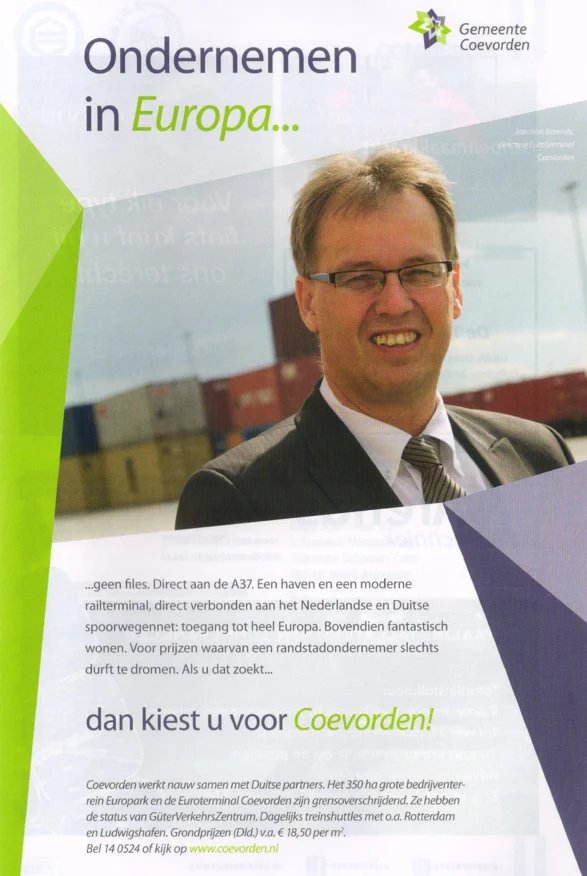
Why advertise a dry port in Drenthe at a football match in Groningen? Because the Euroborg is the undisputed commercial capital of the North. If you want to lure major logistics companies, agricultural exporters, or frustrated investors looking to escape the congestion and high costs of the western Netherlands, the business seats of this stadium are exactly where you cast your net.
A Look into the Future
Looking back from 2026, the strategy employed by the Gemeente Coevorden was incredibly prescient. The logistics sector in the Netherlands exploded over the following decade, driven by the e-commerce boom and the need for efficient cross-border rail freight to reduce carbon emissions. The Euroterminal Coevorden, with its unique “GüterVerkehrsZentrum” status (a German designation for a major freight village), successfully positioned itself as the vital inland gateway between the Dutch ports and the German hinterland. The expensive B2B ad placed in the 2013 football programme was a foundational step in building one of the most important logistical arteries in the modern northern economy.