
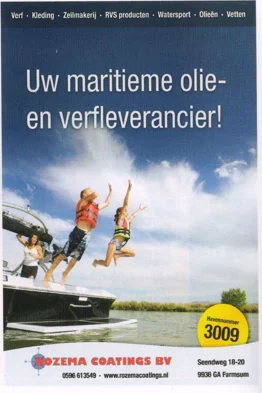
The commercial network of FC Groningen stretches far beyond the city limits, reaching deep into the industrial ports of the Eemsdelta. On the bottom right of page 38, a blue advertisement for Rozema Coatings BV proudly declares them as “Uw maritieme olie- en verfleverancier!” (Your maritime oil and paint supplier).
Based in Farmsum, right next to the bustling port of Delfzijl, this company caters to a highly specific, rugged industry. The North Sea coast is a harsh environment, and the massive cargo ships, fishing trawlers, and offshore vessels operating out of the northern ports require constant maintenance, specialized anti-fouling paints, and industrial lubricants to survive the saltwater and storms. The presence of a maritime paint supplier in the football programme is a testament to the diverse B2B ecosystem within the Euroborg. The shipowners and fleet managers who require these heavy-duty supplies are the same local magnates who hold season tickets in the business lounges.
A Look into the Future
Fast forward to 2026, and the maritime coatings industry has been forced to navigate incredibly strict environmental regulations. The traditional, highly toxic anti-fouling paints that kept barnacles off ship hulls have been heavily restricted to protect marine ecosystems like the Wadden Sea. Companies like Rozema Coatings had to pivot towards supplying advanced, eco-friendly silicone-based coatings and biodegradable lubricants. The gritty, industrial maritime sector advertised in 2013 is now at the forefront of the green shipping revolution, proving that even the heaviest industries in the North can adapt to a sustainable future.