
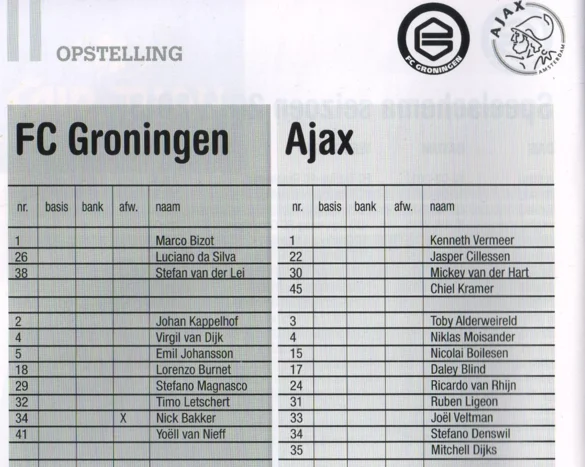
Page 76 of the matchday programme is arguably the most interacted-with page in the entire booklet. Titled “OPSTELLING” (Line-up), it lists the full squads for both FC Groningen and Ajax. But the true historical value lies in the three empty columns next to the players’ names: basis (starter), bank (bench), and afw. (absent).
Before the era of push notifications, this page facilitated a deeply tactile matchday ritual. Fans would arrive at the Euroborg, buy their beer, take their seats, and pull a pen from their pockets. As the stadium announcer’s voice boomed over the PA system reading out the starting eleven, fans would meticulously check the boxes on this page. It was a moment of collective focus, a physical confirmation of the manager’s tactical choices. Seeing the names of future global stars like Virgil van Dijk or Christian Eriksen on this page is fascinating, but the empty checkboxes themselves are a monument to how fans used to consume matchday information.
A Look into the Future
By 2026, this analog ritual is entirely extinct. Today, the starting XI is released exactly 60 minutes before kick-off via slick, sponsor-laden graphics on X (formerly Twitter) and Instagram. Fans already know the line-up long before they even scan their digital tickets at the turnstiles. The stadium announcer’s reading of the names is now just a hype-building exercise rather than an informational necessity. The blank grid on this 2013 page is a nostalgic reminder of a slower, more deliberate era of football fandom, where the matchday programme was the ultimate, indispensable guide to the afternoon.