
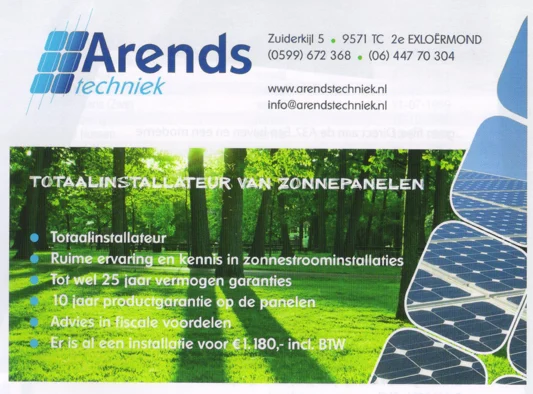
We have seen several advertisements for solar panels in the 2012-13 programmes, but the ad for Arends techniek on page 46 is special because it provides a hard, historical data point. Based in 2e Exloërmond—a long, linear village deep in the peat colonies (Veenkoloniën) of Drenthe—this installation company didn’t just sell a green dream; they sold a specific price tag.
The advertisement boldly states: “Er is al een installatie voor € 1.180,- incl. BTW” (There is already an installation for €1,180 incl. VAT). For economic historians tracking the energy transition, this is a fantastic artifact. In 2013, solar technology was just beginning its transition from a niche, expensive luxury to a mass-market consumer good. By advertising a complete setup for just over a thousand euros in the FC Groningen programme, Arends techniek was signaling to the working-class and middle-class homeowners in the stadium that generating their own electricity was finally within financial reach. The ad also highlights a “25-year power guarantee,” a standard that helped build consumer trust in a relatively new technology.
A Look into the Future
By 2026, the solar landscape in the Netherlands has exploded beyond recognition. The aggressive pricing strategies of early adopters like Arends techniek worked perfectly. Today, the rural areas of Drenthe, including the peat colonies around 2e Exloërmond, are covered in solar panels—so much so that the region now suffers from severe grid congestion (netcongestie), where the local electrical grid simply cannot handle the massive amount of solar power being generated on sunny days. The €1,180 price tag from 2013 is a nostalgic reminder of the early days of a revolution that ultimately reshaped the entire Dutch energy infrastructure.