
At first glance, the banner advertisement at the top of the commercial page in the early 2013 matchday programme looks like standard local B2B marketing. Installatiebedrijf Zijlstra, an installation company based in the small northern village of Leens, is promoting high-efficiency boilers (HR-ketels) alongside a sleek solar panel on a roof. They invite fans to discover the “reliability of the Bosch Solar system.”
However, for industrial historians, this specific advertisement captures a dramatic corporate pivot during one of the most turbulent periods in the global energy transition. In early 2013—exactly when this FC Groningen programme was printed—the German engineering giant Bosch was bleeding money. Crushed by a flood of heavily subsidized, ultra-cheap photovoltaic (PV) panels from Chinese manufacturers, Bosch made the brutal decision in March 2013 to completely abandon its electricity-generating solar division, absorbing a loss of nearly 2.4 billion euros.
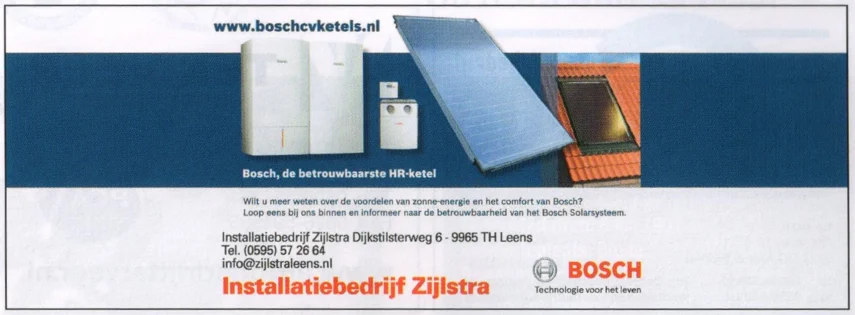
So, why was a local installer in Leens still proudly advertising a Bosch solar system? The secret lies in the technology. The panel shown in the ad, connected to the HR-ketel, is not a photovoltaic panel meant to generate electricity; it is a solar thermal collector (zonneboiler) designed to heat water. While Bosch fled the bloodbath of the silicon wafer market, they doubled down on their thermotechnology division. They realized that their future wasn’t in competing with Asia over electricity generation, but in dominating the European market for integrated home climate control and heating.
A Look into the Future
By 2026, the wisdom of this 2013 corporate pivot is undeniable. If you search for Bosch solar products today, you won’t find traditional electricity-generating PV panels; instead, you will find advanced solar thermal collectors (often under their Junkers brand) and high-tech heat pumps. The advertisement from Installatiebedrijf Zijlstra serves as a perfect historical snapshot of the exact moment a global titan changed course, relying on trusted local installers in places like the Groningen province to sell their new vision of sustainable home heating to the masses.