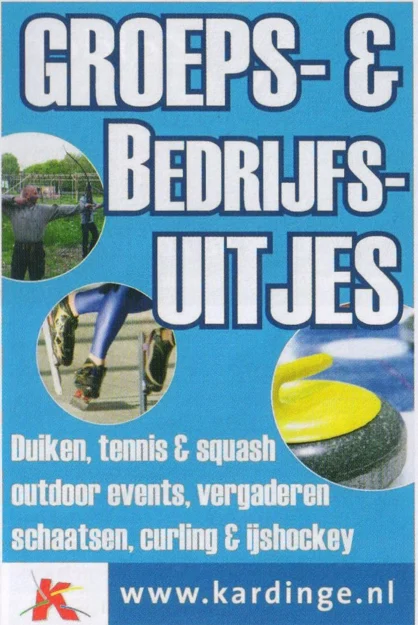
Football is the undisputed king of sports in Groningen, but it is far from the only athletic heartbeat in the city. Sharing the advertising space in the early 2013 matchday programme is a vibrant, action-packed ad for Kardinge, the largest multifunctional sports and recreation center in the northern Netherlands.
The advertisement specifically targets “GROEPS- & BEDRIJFSUITJES” (Group & Company Outings). It features a collage of activities that contrast sharply with the grass of the football pitch: archery, ice skating, and a curling stone. The text lists an exhausting array of options, including diving, tennis, squash, outdoor events, and ice hockey. Placing this ad in the FC Groningen programme was a masterstroke of local marketing. The stadium on a matchday is packed with local business owners and corporate sponsors—the exact demographic responsible for organizing annual company team-building days.
Kardinge served as the ultimate recreational counterweight to the professional tension of the football club. While fans passively watched elite athletes at the stadium, Kardinge offered them the chance to actively participate in sports, whether it was a family weekend on the ice rink or a highly competitive, slightly clumsy corporate curling tournament.
A Look into the Future
Looking at this ad from the perspective of 2026, Kardinge remains an absolute institution in Groningen. While digital entertainment and virtual reality have transformed how people spend their free time, the demand for physical, communal experiences—especially post-pandemic—has surged. The corporate outings advertised in 2013 are still a staple of Dutch work culture. Furthermore, massive sports complexes like Kardinge have undergone significant sustainability upgrades over the last decade, transitioning away from the massive energy consumption required to freeze ice rinks in 2013, aligning with the city’s broader green energy goals.