There is a profound, almost literary satisfaction in looking at the “Speelschema” (Season Schedule) on the final day of a football campaign. Page 18 of the May 18, 2014 matchday programme serves as the definitive, printed diary of FC Groningen‘s turbulent and ultimately triumphant 2013/2014 season.
Unlike the blank schedules printed back in August, this page is heavy with history. Running your finger down the “TIJD/UITSLAG” (Time/Result) column, you can trace the entire emotional arc of the year. You see the chaotic autumn draws, the winter slump, and the spectacular spring revival that culminated in a historic six-match winning streak. But the most satisfying part of the page is found at the very bottom, in the “PLAY-OFFS” block. The previously blank lines for the semi-finals against Vitesse have been filled in with glorious ink: a 1-0 home victory followed by a stunning 1-4 demolition in Arnhem.
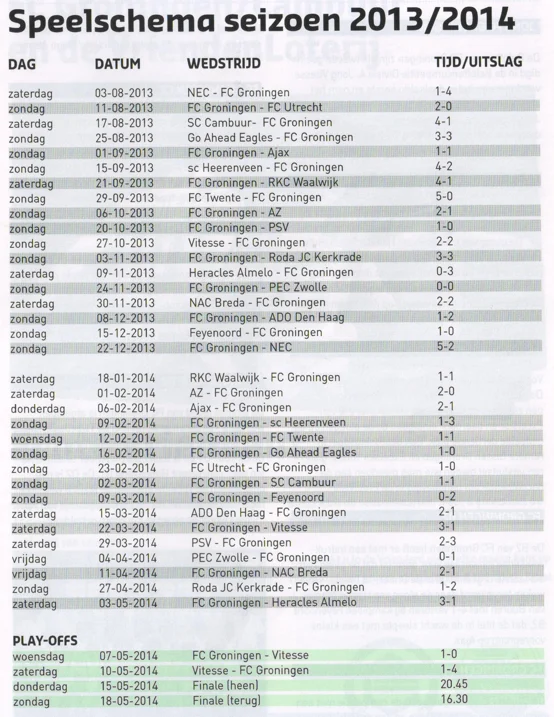
Only two lines remained blank: the dates for the “Finale (heen)” and “Finale (terug)” against AZ Alkmaar. For the fans holding this booklet in the Euroborg before kickoff, those empty spaces represented the final hurdle. The marathon was over; the team had survived the sprint of the semi-finals, and now, only 90 minutes stood between them and European football.
A Look into the Future
The fans who kept this programme and filled in those final two blank lines with a pen got to write a very happy ending. The first leg in Alkmaar ended in a tense 0-0 draw, but the return leg at the Euroborg—the match this booklet was printed for—ended in a resounding 3-0 victory for FC Groningen. The ledger was officially closed with a ticket to the UEFA Europa League qualifiers. Today, in the era of digital apps and instant updates, a fully completed, physically printed season schedule is a beautiful, nostalgic artifact of a fan’s year-long devotion.